Generate a Model for Your Bracelet Design with AI
6 February 2026
Jewelry is changing quickly under the influence of AI, and designers now have new ways to present their pieces. With AI models for jewelry, you can produce realistic visuals of a bracelet worn on a model without booking a traditional photoshoot. The technology reads the design, its texture, and its color, then builds a lifelike figure that carries the piece properly. The result is stronger visual storytelling, produced in a fraction of the usual time.
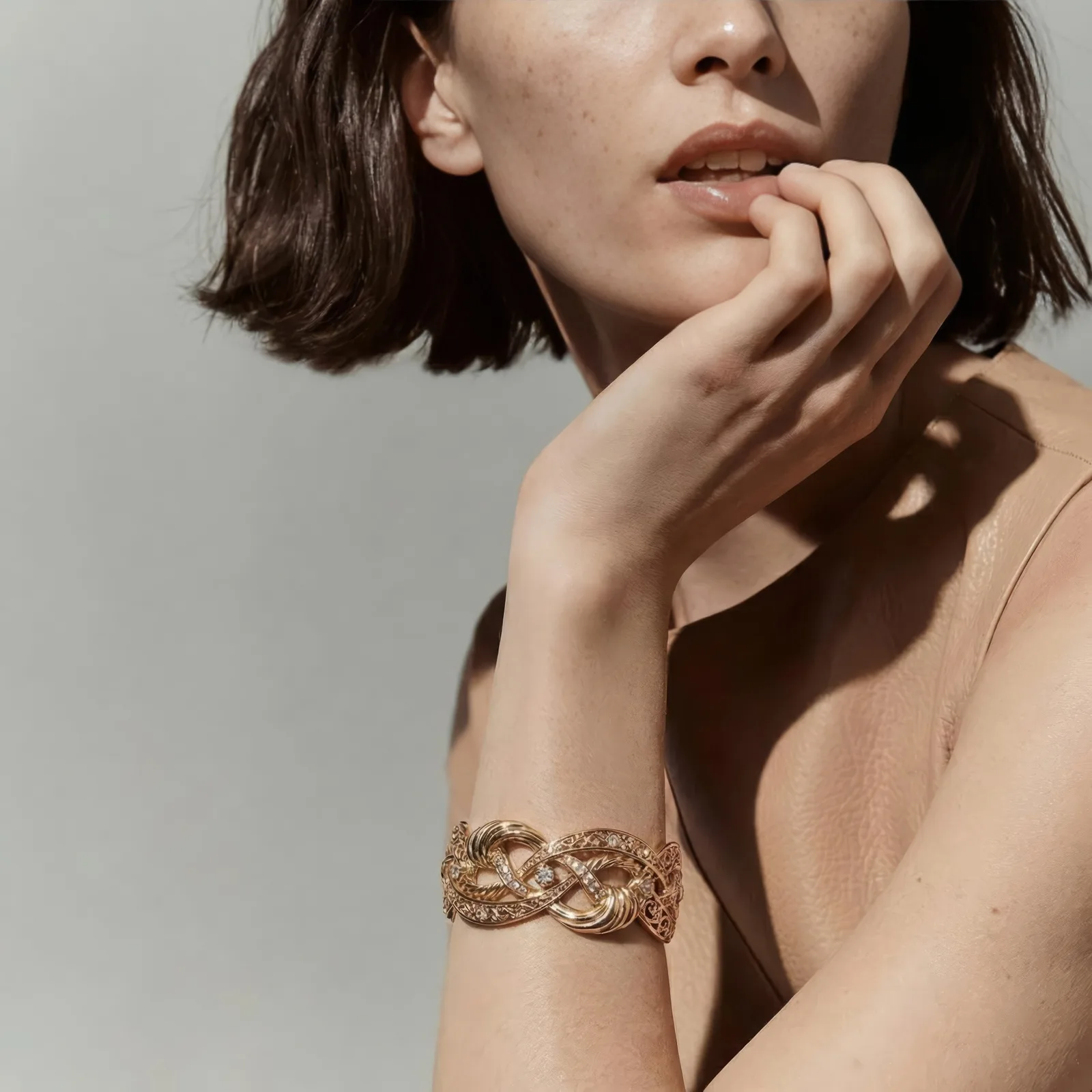
Understanding AI models for jewelry
AI models for jewelry let designers see their pieces on virtual figures. The algorithms replicate how a bracelet behaves in real life: reflections, shadows, and the way it sits on the wrist. That removes the cost of a photoshoot while keeping the visual quality clients and audiences expect.
What designers gain
Working this way has several practical advantages. You can test styles, sizes, and colors without producing a physical prototype. The design process gets shorter, presentation stays consistent from one piece to the next, and marketing, e-commerce, and client presentations all draw from the same high quality set of visuals.
Creating lifelike results
The technology analyzes what makes each bracelet specific, its texture, color, and shape, and applies those features to a realistic model. What comes back is an accurate representation of the piece on a wrist, with the details readable from every angle rather than flattened by a generic render.
Customizing the visuals
With AI fashion models, lighting, background, and styling can all be tuned to a brand's aesthetic. The same bracelet can be presented for social media, for an online store, or for a campaign, each version framed differently. That flexibility is what makes the imagery feel like it belongs to your brand rather than to the tool.
Saving time and resources
Because the photoshoot disappears, so do the model booking, the photographer, and the studio rental for every new piece. Teams spend their hours on the creative work instead of on logistics, and the output still reaches a professional standard. For jewelry specifically, AI models built for jewelry handle the small scale of the piece without losing its detail.
Better marketing and sales
Good imagery does the selling. Realistic bracelet visuals attract buyers, support the online shopping decision, and hold attention on social platforms. Showing a piece accurately and consistently builds credibility, and credibility is what converts.
Where jewelry design is heading
AI models for bracelets are changing how designers create and present jewelry, making the work faster and more visual at the same time. Brands that adopt them can build their visual storytelling without photoshoots and show each piece in a realistic setting.
Put your bracelet on a model
Start with a single piece: upload a clear image of the bracelet and see it worn. Open the AI models studio and work through your collection from there. If you want the piece on an existing photo instead, virtual try-on for jewelry covers that case.