AI Fashion Sketch Generator: Flat Sketch or Designer Sketch from Text
The AI flat sketch generator draws production ready fashion flats from words alone. Describe the garment, the silhouette, the stitching, the pockets, the trims, and the AI returns a clean technical flat: the drawing a manufacturer expects at the front of a tech pack. A hoodie, a trench coat, or a technical activewear piece goes from sentence to spec ready sketch in seconds.
Updated 15 September 2026
- 1Describe your garment
- 2Import it into your tech pack
- 3Create your sketch in SVG format
How it works
Describe your garment
Write the piece into the text field the way you would brief a sketcher: a cropped biker jacket with an asymmetric zip, welt pockets, ribbed hem. The more construction detail you name, the more the flat carries.
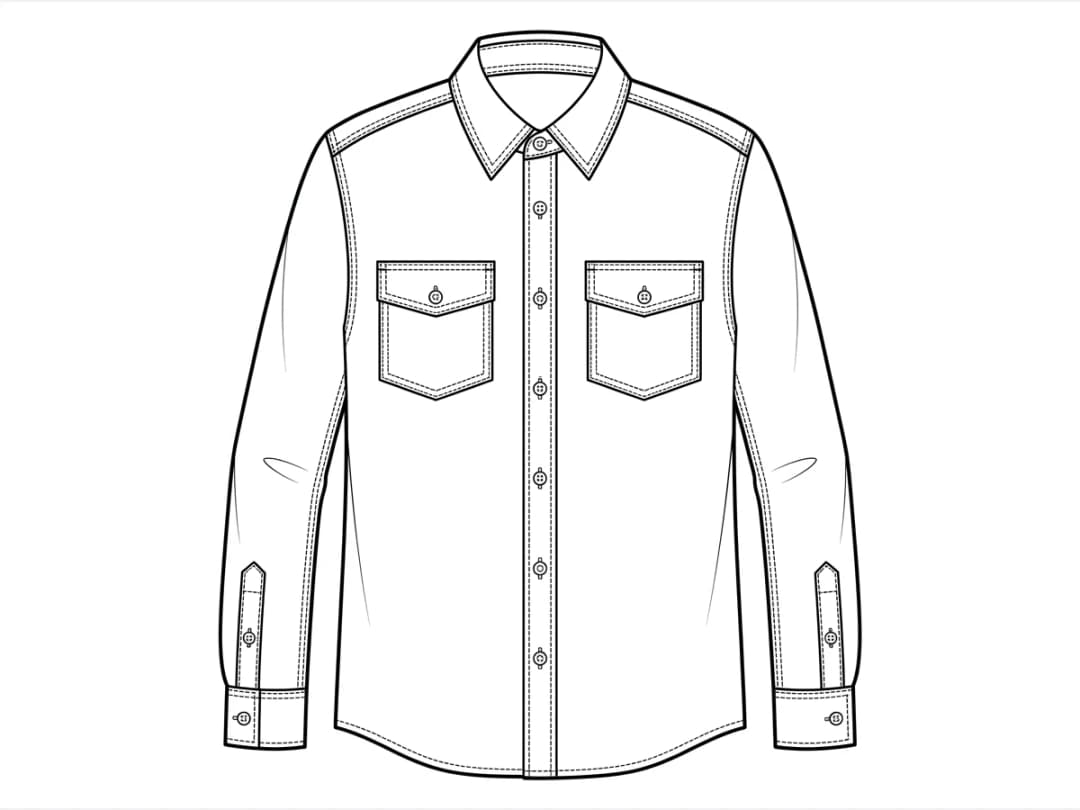
Import it into your tech pack
Download the sketch as a PNG and drop it straight into your tech pack, where it anchors the specification the factory will work from.
Create your sketch in SVG format
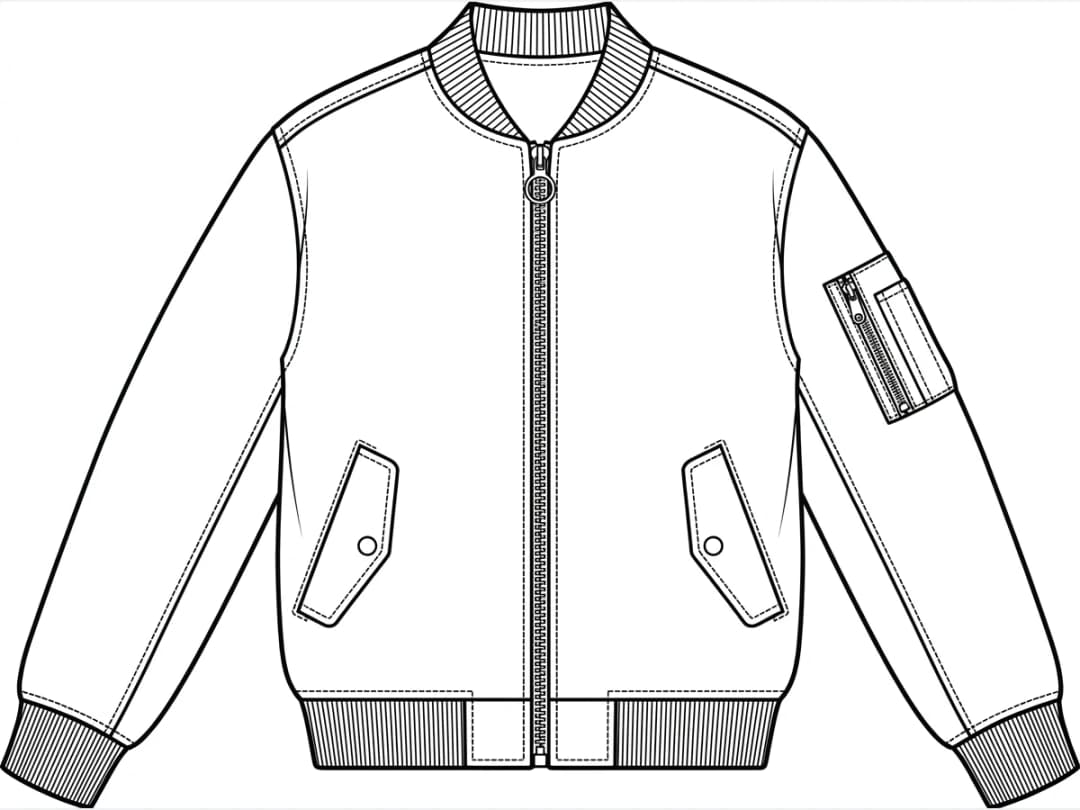
The same sketch can be generated as an SVG vector. That version opens in tools like Adobe Illustrator, where you can edit any line, move a pocket, redraw a seam, without starting over.
No photo required
This generator starts from language, which matters early in development when the garment exists nowhere else. If you do have a reference photo, the image to flat sketch feature draws the flat from the picture instead, and the SVG sketch generator covers the vector workflow in depth. Flats made here feed directly into the AI tech pack generator. Open the tech pack studio to draw your first flat.
Frequently asked questions
What level of detail can I specify?+
Anything you can name: silhouette, closures, stitching, pockets, collars, trims. The flat is drawn from your description, so a precise brief gives a precise sketch. Details you leave out are the AI's to decide, and regenerating with a sharper description is the normal way to converge.
In what formats do I get the sketch?+
PNG for direct use in a tech pack, and SVG when you want a vector you can edit line by line in software like Adobe Illustrator.
How does this fit into a tech pack?+
The flat sketch is the visual backbone of a tech pack, and the studio is built around that: generate the flat here, then build the specification around it in the tech pack studio, measurements, materials, and construction notes included.
Do I need drawing skills?+
No. The entire input is a text description. That is the point of the feature: designers who do not draw flats, or teams without an illustrator on hand, get manufacturer ready sketches from a written brief.
Try it yourself
Everything on this page was made in the studio. Your first designs are minutes away.
Open the studioRelated features
- AI Fashion Video from Reference ImagesPut your model, your garment and a place into one video: add up to three reference pictures, describe the scene, and get a 5 to 15 second fashion clip in 9:16, 1:1 or 16:9.
- Fashion Reel Templates & AI Motion DesignEighteen Motion Design templates for fashion reels: drop your photos or clips, edit the words, render a 10-second video in 9:16, 4:5, 1:1 or 16:9. One credit, every plan.
- AI Clothes Maker, Design Clothes Online: The New Black AIDesign clothes online with an AI clothes maker: describe the piece, see it worn in seconds, iterate, then send a tech pack to your factory. 1 credit per design.
- AI Image Generator for Fashion: Create or Edit Any ImageWrite what you want and get the image, or upload up to three references and describe the change: the free-prompt tool that creates or edits any fashion visual, in any format.
- Create Similar Outfits with AIUpload an outfit image and get close variations of it: same spirit, same silhouette, new pieces. The fast way to build a capsule around one look that works.
- AI Image Vectorizer for Fashion: Logo, Print and Artwork to SVGTurn a logo, a print or an illustration into a real SVG: colour shapes that scale to any size, ready for screen printing, embroidery, labels and Illustrator. 1 credit.
- Generate AI Fashion in Bulk for Your CatalogGenerate a whole catalog in one run: upload up to 30 product photos, pick a workflow, write one brief for the batch, and get AI models, try-ons or videos for every item at once.
- Create an AI Video of a Fashion Model Turning AroundTurn a front and a back photo into a smooth AI turnaround video with Model 360: the model turns on the spot or the camera orbits, every detail of the outfit kept from every side.
- AI Fashion Design for Kids, Toddlers and BabiesDesign kids fashion with AI: pick the age, from toddler to teenager, describe the outfit and get original children's clothing concepts.
- Extend an Image to a New Ratio with AIChange the aspect ratio of any photo with AI. Pick a new format such as 1:1, 9:16 or 16:9 and the AI extends the scene to fill it, instead of cropping what is already there.