What AI Will Not Change in Fashion
Published 6 April 2026
Everyone is asking what AI will change in fashion. The more interesting question is the opposite one: what will it not change?
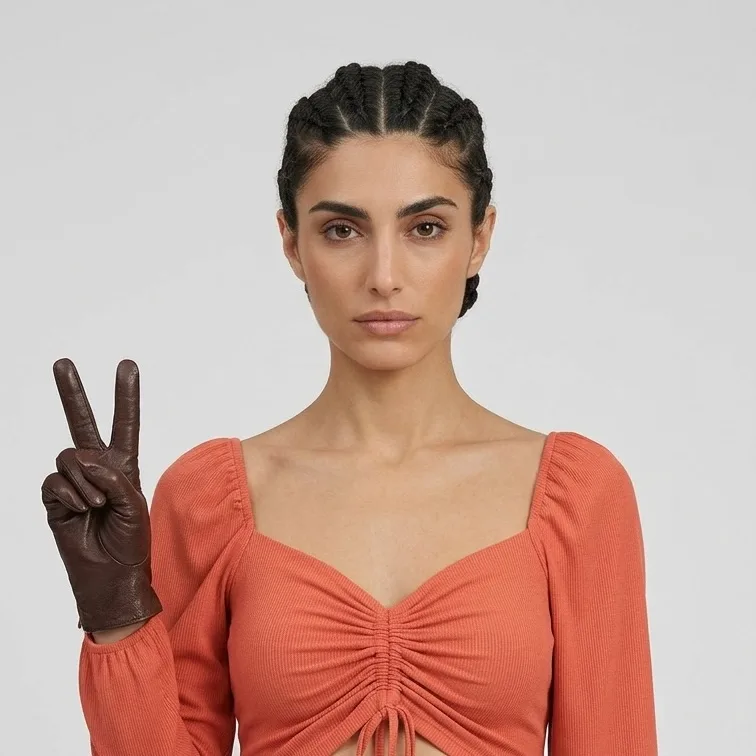
The body
Fashion always returns to the body. Not the idealized body, not the digital body, the actual physical mortal imperfect one. Fabric against skin. The weight of a coat. The feeling of being dressed. No overlay replaces the sensory experience of wearing something real. The body is the constant.
The desire to be seen
Not liked, not optimized. Seen. Recognized by another human as existing, as mattering, as having made a choice. Fashion is fundamentally a social act between bodies in physical space, and that need is prehistoric. AI does not touch it.
The morning ritual
Getting dressed is one of the last daily acts that is entirely yours. Intimate, private, repeated. It is where identity gets assembled each day. However that ritual evolves, it stays a deeply human moment of self-construction.
The emotional charge of a specific garment
Not clothes in general. That jacket. The one you wore the night everything changed. The dress your mother gave you. The shoes you saved for. AI can generate infinite garments, but it cannot manufacture the emotional weight a particular object picks up through lived experience.
The signal between strangers
Two people passing on the street who recognize something in each other's dress: a subculture, a reference, a value system. That silent recognition is a human act of pattern-matching and belonging. It predates brands, predates the industry, almost predates language.
Craft as proof of care
When something is made slowly, by hand, with difficulty, it says that someone cared enough to do it the hard way. That signal does not lose meaning. It gains it. The harder AI makes craft to justify economically, the more emotionally powerful the choice to keep doing it becomes.
The unflattering thing you wear anyway
Fashion has never been purely rational. People wear uncomfortable shoes, impractical silhouettes, things that make no objective sense, because desire, rebellion, humor, and perversity are permanently woven into how humans dress. AI cannot optimize this away. It is the point.
Finally
What does not change is that fashion was never really about clothes. It is about mortality, dressing a body that ages and dies, leaving traces. It is about belonging, signaling tribe, class, values, moment. It is about transformation, the fantasy that what you wear can change who you are. It is about time, a garment holding a moment, a memory, an era.
These are not fashion problems. They are human problems that fashion happens to address, and they are fully AI-proof.
Where AI does help
AI is good at the parts that were never the point: the blank page, the fifth colorway, the documentation, the imagery. Leave it those. Open the design studio and keep the rest for yourself.
Related articles
- Change Clothes Colour in a Photo with AI: The New Black AIHow to change the colour of clothes in a photo with AI: HEX code or a name, one garment and not the rest, the colourway workflow for a product page and its Shopify variants, and what to check.
- AI Fashion Design Prompts, 30 Examples: The New Black AINine rules for AI fashion design prompts, thirty prompts that work for outerwear, dresses, knitwear, shoes, bags, textiles and edits, and a table of the words that change the result most.
- AI Virtual Try-On Videos for Fashion: The New Black AIYour garment on the model you supply, in motion: the clip that answers the question a still cannot, whether the piece holds when the person moves.
- Generative AI in Fashion: What It Does, What It Does Not, and Where to StartGenerative AI in fashion, job by job: design, product imagery, video, tech packs and copy, what it does not do, and the one test a brand should run first.
- How to Use AI Training for Fashion Styles and Brand IdentityTrain AI on your own references so every new design matches your brand: reference images, web pages as style sources, and per garment training.
- Sketch to AI Fashion Design: A New Way to Visualize Clothing IdeasTurn a fashion sketch into a photoreal garment in seconds. How to write prompts, iterate on concepts, and work from any type of drawing.
- Smart Automatic AI Fashion Image EditingDescribe the change you want and the AI edits the fashion image: faster iteration, consistent brand visuals, no photo editing skills required.
- What is Y2K Fashion: The New Black AIWhat is Y2K fashion: the style of the years around 2000, its key pieces, outfits for women and men, how it differs from the 90s, and how a brand designs a Y2K collection.