How to Use AI Training for Fashion Styles and Brand Identity
Published 19 February 2026
Most AI design tools start from nothing every time you use them. Training changes that. You teach the system a specific aesthetic once, then generate new pieces that stay inside it. For a designer or a brand, that is the difference between a novelty and a working tool: experimentation and rapid prototyping that still come out looking like you.
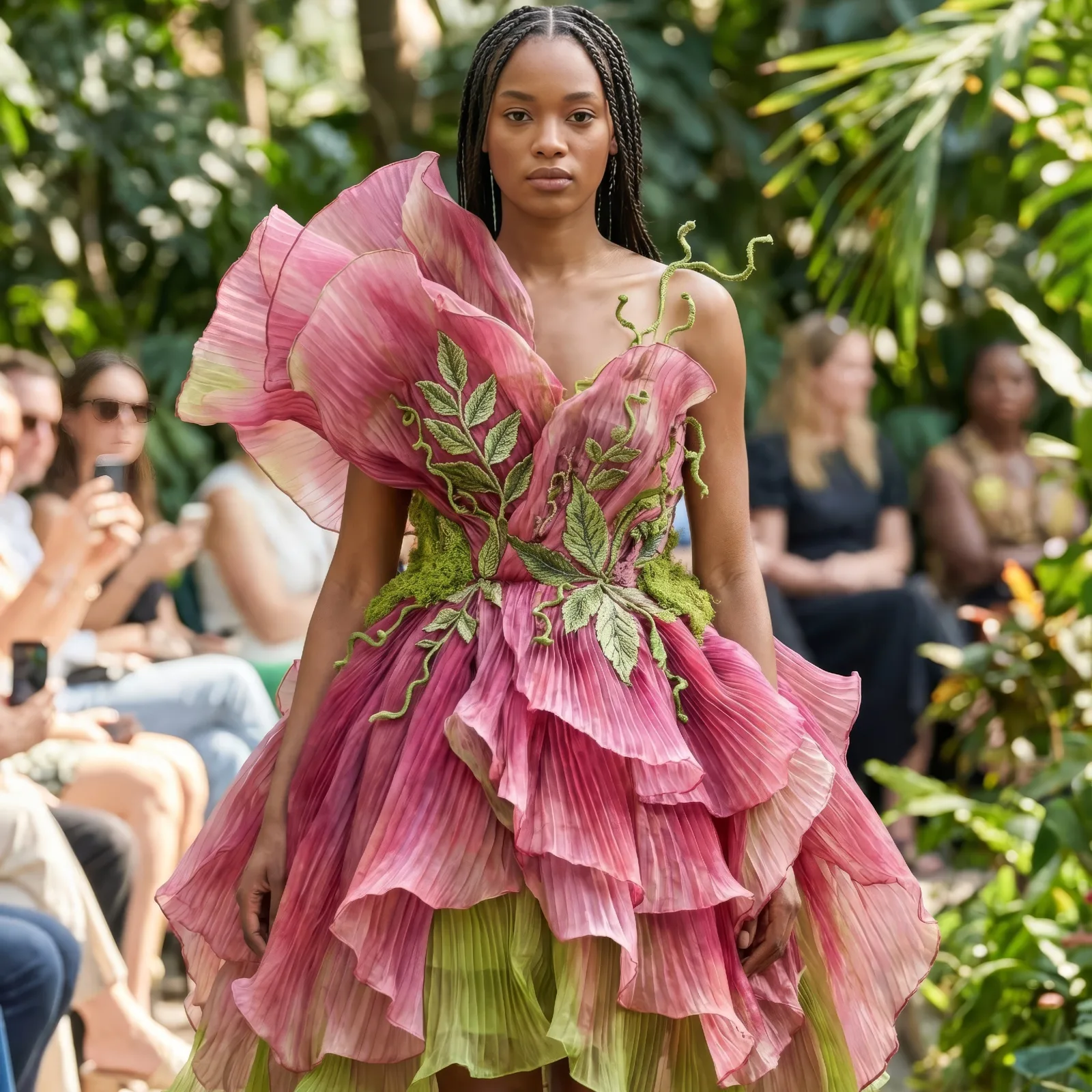
Understanding AI fashion style training
Style training means teaching a model to recognize and reproduce a particular visual language: silhouettes, color palettes, materials, patterns, and the overall mood that ties them together. You guide future outputs by choosing what the model sees. The payoff is consistency, held across collections, campaigns, and brand visuals rather than rebuilt by hand each season.
Training the AI on reference images
The most effective route is a set of reference images. They act as examples of the aesthetic you want learned, and the quality of the curation decides the quality of the result. Runway photos, fabric details, garment close ups, editorial imagery: each one narrows what the model considers correct. Once trained, the design generator working from a reference dataset produces new concepts carrying the same design DNA.
Using a web page as a style source
You can also point the training at a web page that represents a brand or a specific direction. The model reads a coherent visual environment: typography, colors, product photography, styling choices. For a brand, that means new designs align with the existing identity without anyone recreating those details by hand. It works particularly well for labels with a strong, recognizable look.
Generating new designs in the same style
Once training is done, new pieces in that style take seconds. Variations, seasonal updates, entirely new garments that still feel authentic to the original concept. Instead of hours refining an initial sketch, you see several directions at once and choose. Moodboards are a natural place to collect the ones worth keeping.
Aligning AI designs with brand identity
Brand identity is what a fashion company actually owns, and training is a way to protect it. New designs stay visually consistent with the established image, whether that image is minimalism, avant garde, streetwear, or luxury. The output supports the brand story instead of diluting it, which is the usual failure mode of generic AI imagery.
Training for specific garments and categories
Training is not limited to a broad aesthetic. You can train on a garment type: dresses, jackets, footwear, accessories. That precision lets a team experiment inside one product line while keeping design accuracy, and it makes concept testing across categories a manageable exercise rather than a project.
Creating multiple trainings with precision
The flexibility matters as much as the accuracy. Create as many style trainings as you need, each aimed at a different look, collection, or creative direction. Trends move, brand strategies split across lines, and a library of trainings adapts to both. With careful reference selection, the results get remarkably close to what you had in mind.
Train your first style
Gather ten images that represent your look and train on them. Open the design studio and generate the first pieces in your own aesthetic, or see how the reference dataset feature handles your images.
Related articles
- Visual DNA: Train the AI on Your References: The New Black AIUpload reference images or give a web page, choose a focus (brand vibe, collection direction or product type), and every new design follows that creative direction instead of a generic one.
- AI Fashion Images from the Command Line: the tnb CLI for Claude Code, Codex and Cursornpx @thenewblack/cli gives every fashion workflow to your terminal and to AI coding agents: one command per workflow, local photos uploaded, renders saved next to them.
- What is Y2K Fashion: The New Black AIWhat is Y2K fashion: the style of the years around 2000, its key pieces, outfits for women and men, how it differs from the 90s, and how a brand designs a Y2K collection.
- Consistent AI Model Across Photoshoots: The New Black AIHow to keep the same AI model on every product of a collection: a profile reused, a reference photo, a Visual DNA, the framings that hold the identity, what still drifts, and the workflow in order.
- Shopify Profit and Loss by Month: The New Black AIThe Store page of The New Black AI now shows a Profit & loss for a Shopify fashion brand: this month and the one before, net sales, cost of goods, ad spend, your own costs, profit and margin.
- Shopify Variant Images per Color: The New Black AIThe New Black AI adds a Variants tab to the Shopify product window: every variant with its price, SKU and picture, set from your creations, a file, or a creation's tile with Use for a variant.
- AI Fashion Design Security and Privacy: The New Black AIA Security page says it all: creations private to your account, never used for training, full ownership, encryption in transit and at rest, SOC 2 providers, and what happens when you delete.
- AI Fashion Templates Free for Commercial Use: The New Black AIThe models, garments, fabrics and backgrounds provided in the studio are cleared for commercial use: your campaigns, your product pages, your lookbooks. And what you generate is yours on every plan.
- AI UGC Videos for Fashion Brands: The New Black AIA presenter shows your product and speaks your script, smartphone style, from 5 to 30 seconds. One creator video per product, without booking a creator.
- Generative AI in Fashion: What It Does, What It Does Not, and Where to StartGenerative AI in fashion, job by job: design, product imagery, video, tech packs and copy, what it does not do, and the one test a brand should run first.