Sketch to AI Fashion Design: A New Way to Visualize Clothing Ideas
Published 18 December 2025
The distance between a sketch and a finished visual used to be measured in samples and weeks. AI has closed most of it: a drawing becomes a photorealistic design in seconds, which means a concept can be looked at and revised the same afternoon it was imagined. Any kind of sketch image works as a starting point, and that alone makes the process open to designers who never had a studio behind them.
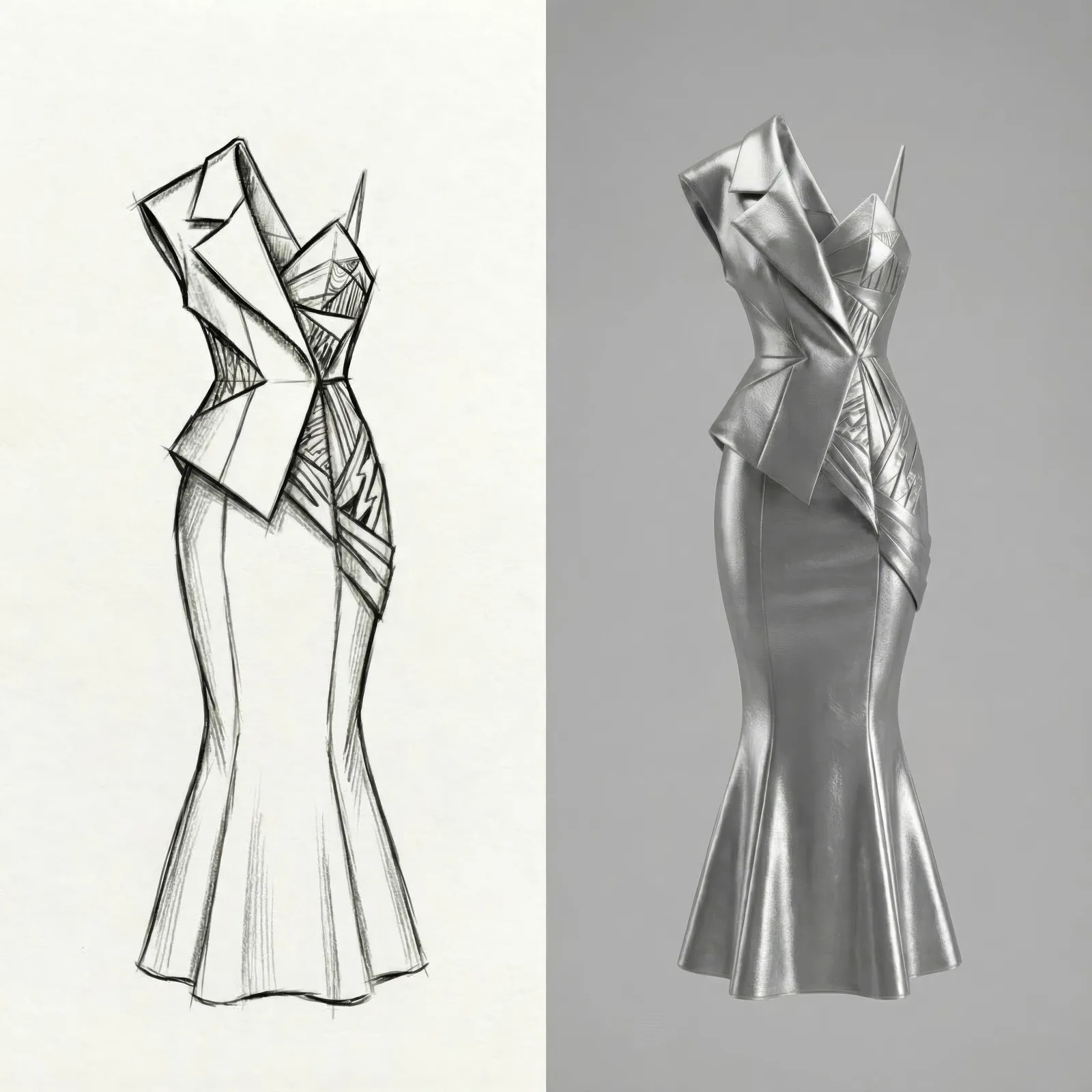
1. From sketches to photoreal collections
Feed a simple sketch to an AI fashion design tool and watch it resolve into a realistic garment. The result is something you can put in front of a client or a team without translating it first. It is especially useful when you want to see the same silhouette in different fabrics, colors, and textures without building a prototype for each one. The sketch to design tool does this step in a single pass.
2. Detailed prompts make photoreal outputs
The quality of the output tracks the quality of the instruction. Naming the colors, the patterns, the fabric type, and the garment details gives the AI enough to match what you actually pictured. A well written prompt is the difference between a design that reads as yours and one that reads as generic, and it makes the result far easier to share with a client or a colleague.
3. Visualize and iterate quickly
The real gain is the iteration speed. Rather than waiting on sample after sample, a designer sees variations of a concept immediately and picks a direction from evidence instead of intuition alone. Decisions get better because there are more of them, made faster, on things you can actually see.
4. Time and resources saved
Physical prototypes cost money and calendar. Producing realistic digital designs from a sketch removes most of that expense from the exploratory phase, where the majority of ideas get abandoned anyway. What is left over goes into creativity and experimentation, which is where it belongs.
5. Any type of sketch image works
The tools are flexible about their input. A hand drawn illustration, a scanned digital sketch, a rough concept drawing: each can be interpreted and turned into a finished design. That range is what makes the approach usable by designers at every level, not only the ones working in a full digital pipeline. Our guide on going from fashion sketches to finished designs covers what to prepare before uploading.
6. Wider creative range
Seeing a sketch realized instantly opens directions you would not otherwise chase. Patterns can be mixed, palettes tested, silhouettes tried, all without a commitment to production. Applying a fabric or textile pattern to a sketch is one of the quickest ways to see how far an idea will stretch.
7. Ideas realized faster
Sketch to AI design closes the gap between imagination and something concrete. A designer sees a concept arrive quickly enough to still be excited about it, and the result is ready to present to a client, publish online, or hand to production. The technology adds precision and speed; the vision stays where it started.
Upload a sketch
Take a drawing you already have, even a rough one, and see what it becomes. Open the design studio and turn your first sketch into a photoreal design.
Related articles
- Create Haute Couture Fashion Design with AIUse an AI clothing design generator to explore couture concepts: original designs from your own parameters, fast prototyping, and inspiration in seconds.
- How to Turn Your Fashion Design Into a Magazine Cover with AITurn a sketch, a design, or a photo from your camera roll into an editorial magazine cover with AI: layouts, poses, bold headlines, minutes of work.
- AI Image to Sketch GeneratorTurn a clothing photo into a flat technical sketch with AI. Faster tech packs, fewer errors, and far less manual drawing for design teams.
- How AI Enables Collaborative Fashion Design Through Shared PromptsShared prompts turn fashion design into a collective process: designers borrow, adapt, and build on each other's ideas to create new looks faster.
- From Sketch to Photo: Turn Sketches into Fashion Designs with AITurn a fashion sketch into a finished design with AI: how the generator reads your drawing, how you refine it, and why the process runs in hours.
- AI Fashion Design Prompts, 30 Examples: The New Black AINine rules for AI fashion design prompts, thirty prompts that work for outerwear, dresses, knitwear, shoes, bags, textiles and edits, and a table of the words that change the result most.
- AI Fashion for Kids: A New Era for Children's ClothingAI fashion design for kids, toddlers, children and teenagers: explore age appropriate concepts, test directions fast, and prototype without sampling.
- Transforming Fabric Design into Clothing DesignTurn a fabric pattern into finished clothing designs with AI: faster iteration, more variations to choose from, and smoother work across a team.
- Clothing Design Software: The New Black AIClothing design software explained: the five kinds of fashion design software, what each one does, how to choose, and where AI design tools fit from concept to tech pack.
- AI Textile Pattern Generator, Print-Ready: The New Black AIDescribe a pattern, its colours and the fabric it is printed on, and get a seamless repeat ready for a textile printer. Then apply it to a sketch or turn it into a garment.