8 Brands Using AI Fashion Models: Real Cases (2026)
Published 13 November 2026
Eight well known fashion brands and retailers have publicly used AI generated models between 2023 and 2026: Levi's, Revolve, Mango, Zalando, H&M, Guess, Valentino and Gucci. The ones that were received calmly used AI for scale and said so plainly (Zalando for campaign imagery, H&M with digital twins of real models who consented and are paid); the ones that drew the loudest backlash put a synthetic face where people expected a real one, in a magazine or on a luxury feed, with a label that was easy to miss or a result that looked cheap. For a brand that wants to do the same on its own product photos, the method that holds up is the H&M and Zalando one: real garments, a consistent model you have the right to use, clear labelling, and AI used for the volume while people keep the creative direction. Below, each case with its year, what the brand did, how it was received and the public source we read.
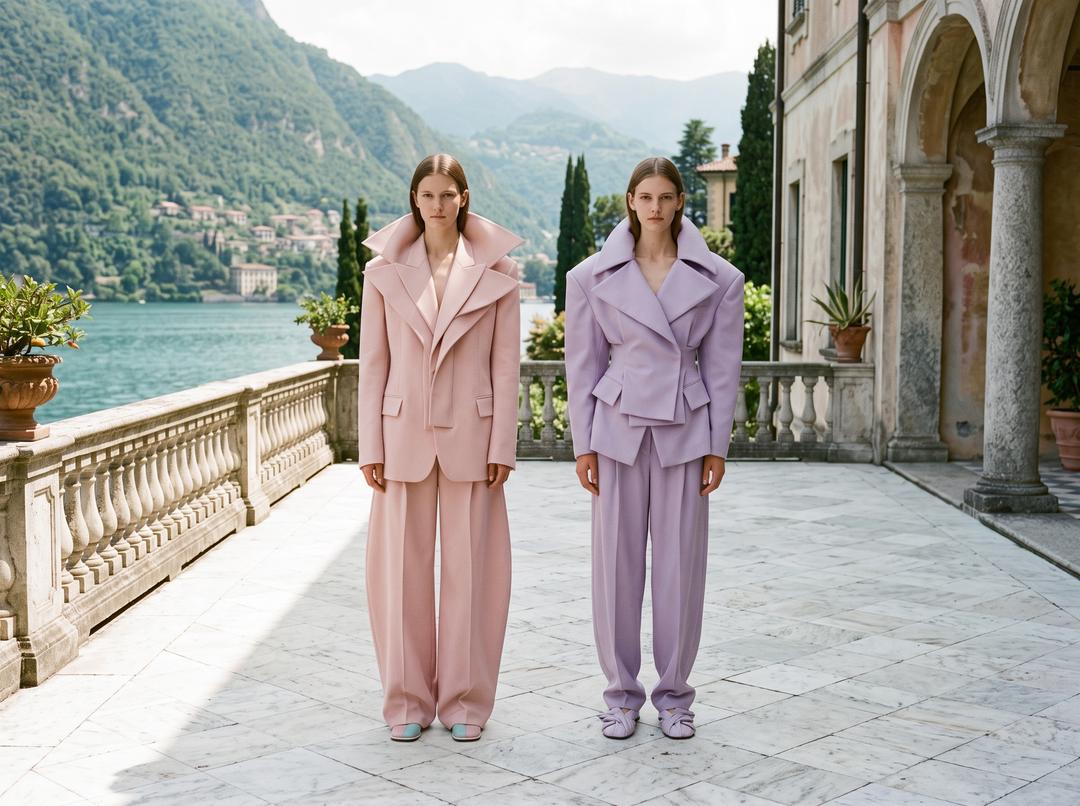
Updated November 2026.
Quick answer
- The biggest documented use at scale: Zalando, which said around 70% of its editorial campaign images in the fourth quarter of 2024 were made with AI, cutting production from six to eight weeks to three or four days.
- The model most brands now cite as the responsible one: H&M, which announced AI "digital twins" of 30 real models in 2025, with each model's consent, control over use, the same pay as for a photo, and watermarked images.
- The case that shows the risk of framing: Levi's in 2023, criticised for presenting AI models as a way to increase diversity, then clarifying that live shoots with real models would not be scaled back.
- The case that shows the risk of disclosure: Guess in American Vogue in August 2025, an AI model in a print ad whose only disclosure was in small print.
- The case that shows the risk of quality in luxury: Valentino's AI handbag video in December 2025 and Gucci's AI images in February 2026, both labelled as AI and both called "AI slop" by many commenters.
The cases at a glance
| Brand | Year | What they did | Reception | Source |
|---|---|---|---|---|
| Levi's | 2023 | Announced a test of AI generated models to show more body types and skin tones on product pages | Strong backlash on diversity and jobs; the brand clarified within a week | NBC News, CNN |
| Revolve | 2023 | "Best Trip", a campaign of AI generated imagery on California billboards, then a capsule made from the designs | Presented as a first; no visible backlash in the coverage we read | PR Newswire, FashionUnited |
| Mango | 2024 | A teen line campaign with entirely AI generated models wearing real garments | Concern from model agencies and on social media; the CEO defended it on speed | blue News, CNN |
| Zalando | 2024 to 2025 | Around 70% of editorial campaign images made with AI in Q4 2024; digital twins of real models in development | Mostly read as an efficiency story; the company says traditional shoots are still needed | Reuters, Zalando |
| H&M | 2025 | AI digital twins of 30 real models, with consent, pay and watermarks; first images in July | Mixed: models involved positive, critics worried about jobs and rights | FashionUnited, CNN |
| Guess | 2025 | AI generated models in a print ad in American Vogue's August issue | Large backlash on TikTok over disclosure, beauty standards and jobs | ABC News, CNN |
| Valentino | 2025 | An AI film for its Vans collaboration made from catwalk footage, then an AI handbag video on Instagram | The first passed quietly; the second drew hundreds of critical comments | ContentGrip, Startups.co.uk, Glossy |
| Gucci | 2026 | AI generated images of models posted before its Milan show, tagged "created with AI" | Mostly negative, with some praise | Outlook Luxe |
How this list was made
We kept only cases that pass three tests. The brand or retailer is a real, publicly known fashion company. What it did is documented by a press article from a recognised outlet or by the company's own statement, and we read that source ourselves in November 2026; the sources are listed at the end with their titles and links. And the case involves AI generated people wearing clothes, not only AI designed garments, AI chatbots or AI recommendations.
That rule removed several cases that other lists carry. Early digital personalities such as Shudu or Lil Miquela were made with 3D software years before generative AI, so they belong to a different history. A campaign by Moncler and Adidas Originals in 2023 is often listed, but the coverage we found said it was unclear whether the people in the photos were generated or real, so we left it out. A retailer accused in 2026 of using AI in promotional photos without saying so is also left out: an accusation is not a documented use. Where a source and the brand describe the same fact differently, we give both (Zalando is the example).
None of the brands below is a customer of ours, and we have no relationship with any of them. We make The New Black AI, an AI platform for fashion brands, and the last part of this article shows how a brand can apply these lessons with it. That part is ours; the cases are not.
The cases, one by one
Levi's (2023): the cautionary tale of framing
In late March 2023 Levi Strauss & Co. announced that it would test AI generated models with Lalaland.ai, a company that makes them, so that online shoppers could see a wider range of people wearing each product. The stated aim, as CNN later summarised it, was to show more diverse body types and skin tones.
The reaction was fast and largely negative. Critics argued that the brand was addressing representation cheaply instead of paying a more diverse group of real models; a professor at the Fashion Institute of Technology told NBC News that the project was about saving money, and the Model Alliance warned that fit models could be replaced by body scans. Within a week Levi's added a clarification: the pilot was not "a means to advance diversity", it was not a substitute for real action on its diversity goals, and it was not scaling back live photo shoots or its use of live models. The company also denied that the aim was to cut costs.
What it shows: the technology was not what people objected to. The objection was the story attached to it. Presenting synthetic people as a diversity achievement reads as replacing the very people the brand claims to include. Every later case that went smoothly avoided that framing.
Revolve (2023): an AI campaign as a launch event
On 3 April 2023 Revolve, the American online fashion retailer, announced "Best Trip", which it called the first AI generated billboard campaign, to celebrate its twentieth anniversary. The imagery was made with MAISON.META, a New York creative studio working with AI, and ran on several billboards along California's CA 10 highway towards Palm Springs throughout April, timed to the desert music festivals and to Revolve's own festival. Revolve then sold a limited capsule collection on its site based on the designs shown in the AI images, with a first drop on preorder the day of the launch.
The co founder and co chief executive, Michael Mente, framed it as a technology statement: "Technology is a big competitive edge for us and allows us to continue to win." In the coverage we read, the campaign was reported as a first and a curiosity, without the backlash later cases received.
What it shows: in 2023, an AI campaign that was openly presented as an AI experiment, tied to an event and to real products people could buy, was read as innovation. The disclosure was the message itself, so nobody felt misled.
Mango (2024): AI models for a whole line
In July 2024 Mango launched its first campaign made with AI generated models, for its teen line; blue News reported the line's name as "Sunset Dream". The garments were real and on sale. According to blue News, each item was photographed on its own, then placed on an AI generated model, and the AI produced the matching background. A second teen campaign followed later in 2024. In an October 2024 interview with Bloomberg, quoted by CNN, the chief executive Toni Ruiz defended the approach: "It's about faster content creation."
The reception was split. Model agencies quoted by blue News called it a considerable challenge for their business, one saying he had not expected AI models to become indistinguishable from real people so soon; another called it a change that "will revolutionize an entire industry". CNN noted the wider concern that growing use of AI models could push professional models out of work. Mango did not respond to CNN's request for comment.
What it shows: this is the workflow most brands actually want, real product photos turned into on-model images, and Mango proved it at the scale of a line. It also shows that "the clothes are real" is the first thing a brand must be able to say, because shoppers buy the garment they see.
Zalando (2024 to 2025): AI imagery at industrial scale
In May 2025 Reuters reported that Zalando, Europe's large online fashion platform, was using generative AI to produce imagery for its app and website. Matthias Haase, its vice president of content solutions, said around 70% of its editorial campaign images in the fourth quarter of 2024 were AI generated, that the time to produce imagery fell from six to eight weeks to three or four days, and that costs fell by 90%. Zalando's own strategy page, published in July 2025, describes the same 70% as "AI-enhanced" rather than generated, which is a useful reminder that the line between edited and generated is not sharp. The company is also building digital twins, "high-fidelity replicas of real models", so a model who appears in a campaign can appear on product pages without a new shoot of hundreds of images.
Zalando's reason is speed: being able to answer a trend on social media within days. Haase was careful about the claim: customers engaged more, he said, but "it's not because of AI content that is better than human-created content", rather because it is new and relevant. He also said traditional fashion shoots would still be needed and that photographers would need to learn AI tools. The figures are Zalando's own and were not independently verified in the Reuters report.
What it shows: the largest documented user framed AI as a way to keep up with the calendar, not as a replacement for photography, and published numbers. It was received as a business story rather than a scandal.
H&M (2025): digital twins of real, consenting models
In March 2025 H&M said it would create AI "twins" of real models to use in some social media posts and marketing. Thirty models had already agreed, among them Mathilda Gvarliani. According to FashionUnited, the models keep control over how their digital replicas are used and are paid for them as they are for their photographs, and the first images would carry watermarks saying they are AI generated. Gvarliani described her twin as "just like me, but without the jet lag". The first images were unveiled on 2 July 2025: the twins in denim against stylised city backdrops, made with the Swedish tech company Uncut, as part of an experiment due to run into the autumn.
H&M's chief creative officer, Jörgen Andersson, framed it as creativity, and the company said it was "committed to approach this ethically, transparently, and responsibly". Reactions were mixed. A model involved, Vanessa Moody, described the arrangement as "professional, collaborative and transparent", and the photographer on the project called AI another tool for the creative toolbox. Critics, including the influencer Morgan Riddle, raised concerns about jobs in the industry and the rights of models, and legal advisers quoted by FashionUnited pointed to open questions on likeness rights. Getty Images research cited in the same article found almost 90% of consumers want AI generated images disclosed.
What it shows: consent, pay, control and a visible label did not remove the debate, but they moved it from "is this deceptive?" to "what does this mean for the profession?", which is a debate a brand can stand in.
Guess (2025): the disclosure backlash
The August 2025 issue of American Vogue carried a Guess advertisement featuring AI generated models, a blonde called Vivienne and a brunette called Anastasia, created by the London AI marketing agency Seraphinne Vallora. CNN reported that the only disclosure was in small print on the page. A representative of Condé Nast, Vogue's publisher, told CNN that an AI model has never appeared editorially in Vogue: the page was an advertisement, not an editorial choice.
The reaction came mostly on TikTok, where one video about the ad passed 2.7 million views. Creators said they were "speechless" that a brand used "fake women" in a magazine, said it made them less likely to buy, and worried that models and photographers would lose work; a psychologist interviewed by ABC News warned that repeated exposure to such images makes viewers feel inadequate. The agency's founders, Valentina Gonzalez and Andreea Petrescu, told Good Morning America that they do not aim to replace the modelling industry, that photographers and stylists stay essential, and that their AI models are meant "to supplement and to add" a new marketing avenue. Guess did not answer ABC News or CNN.
What it shows: the place matters. A fashion magazine is where readers expect real people, so an AI model there, labelled in small print, felt like a trick. The same image on a product page, labelled clearly, would likely have drawn little notice.
Valentino (2025): two AI campaigns, two receptions
In September 2025 Valentino Garavani released a six piece rework of the Vans Authentic designed by Alessandro Michele. The campaign was a short film generated with AI from footage of the Fall Winter 2025 to 2026 Paris catwalk show, moving the models through tiled bathrooms, flooded rooms and beaches. Valentino said that "all model and talent imagery was generated with informed consent". The coverage we read described it as lush and cinematic, with no notable public backlash.
On 2 December 2025 Valentino posted an AI generated video on Instagram for its Garavani DeVain bag: people seeming to emerge from a gold version of the bag, then a montage of models, logos and merging bodies. It was labelled as AI generated, and Valentino called it a "digital creative project" made with digital artists. Hundreds of comments called it "disturbing", "cheap", "tacky" and "AI slop", and said it clashed with the craftsmanship a luxury house stands for.
What it shows: labelling is necessary but not sufficient. The first film started from real people and a real show, with their consent, and added what a set could not; the second looked generated for its own sake. In luxury, where the price is justified by craft, a result that looks automated costs more than it saves.
Gucci (2026): AI images before a debut show
In February 2026, ahead of its Primavera show at Milan Fashion Week and the debut collection of its creative director Demna, Gucci posted AI generated images of models on Instagram and X, tagged "created with AI", according to Outlook Luxe. Most of the reaction was negative: commenters called the images "AI slop", one asked why the house could not find a real Milanese grandmother to wear a 1976 outfit, and others said a luxury brand that will not use real people is no different from a mass retailer. Some users praised the images as stunning. An academic quoted in the article noted that where earlier technologies brought luxury brands free positive publicity, AI could bring negative publicity. The article contains no statement from Gucci.
What it shows: the same lesson as Valentino's handbag video, at a higher stake. A debut is the moment a house asks to be judged on its craft, and audiences read AI there as a shortcut.
Also documented, more quietly
Beyond the eight cases, Glossy reported in December 2025 that Hugo Boss said it has used AI imagery across its e-commerce since 2023, that Peek & Cloppenburg tested AI imagery on its sites, and that Jil Sander and MCM used AI visuals in campaigns in 2025. A Berlin production studio quoted in the same piece said most luxury clients use AI to extend existing shoots rather than to make fully AI campaigns. These uses drew little attention, which is itself the point: AI on product pages, labelled and faithful to the garment, rarely makes news.
What brands can learn
1. Product pages are the calm place; magazines and luxury feeds are the exposed place. Every backlash above (Guess, Valentino's bag video, Gucci) happened where audiences expect real people and real craft. Every quiet use (Zalando, Hugo Boss, Mango's line imagery) was about showing real garments at scale. Start where AI does a job shoppers already accept: showing the product worn.
2. The garment must be the real one. Mango's chief executive led with the fact that the clothes were real and on sale. An AI model is acceptable to most shoppers; an AI garment that does not match what arrives in the box is a returns problem and a trust problem. Build from photos of the actual product and check every image against it.
3. Say it, clearly, where the image is seen. H&M watermarked; Valentino and Gucci labelled; Guess used small print. The labelled cases still drew criticism, but none was accused of deception. Getty's research, cited by FashionUnited, says almost nine shoppers in ten want AI imagery disclosed. A short line on the page or the post costs nothing.
4. Never present it as a values achievement. Levi's problem was not the pilot but the claim that synthetic people advance diversity. Use AI to show more sizes, ages and body types if it helps shoppers, and say that is what it does, without presenting it as representation.
5. If the face is a real person's, have their consent, and pay them. H&M and Zalando built digital twins of real models with agreements; Valentino said its film used imagery generated with informed consent. Using a real person's likeness without that is a legal and reputational risk no saving justifies.
6. Keep people in the creative direction. Zalando said shoots are still needed; the Guess agency said photographers and stylists stay essential; H&M's photographer called AI a tool. The brands that were taken seriously used AI to multiply a direction set by people, not to replace the direction.
7. Quality is the brand. Valentino's bag video and Gucci's images were labelled and still hurt, because they looked automated. A brand should publish only the AI images it would have been proud to shoot, and throw the rest away.
How to start, on your own products
What the large brands built with specialised studios and long pilots is now available to a small brand as a workflow. Here is the order we recommend, with the tools of The New Black AI where they fit; any tool that keeps your garment faithful will follow the same steps.
Step 1: start from the product photo. A clean photo of the real garment, flat, on a hanger or on a mannequin, with the shape, the print and the details visible. In AI generated models, the Product to Model workflow builds the on-model image around that photo, so the print, seams and colour come from your garment rather than from the AI's imagination.
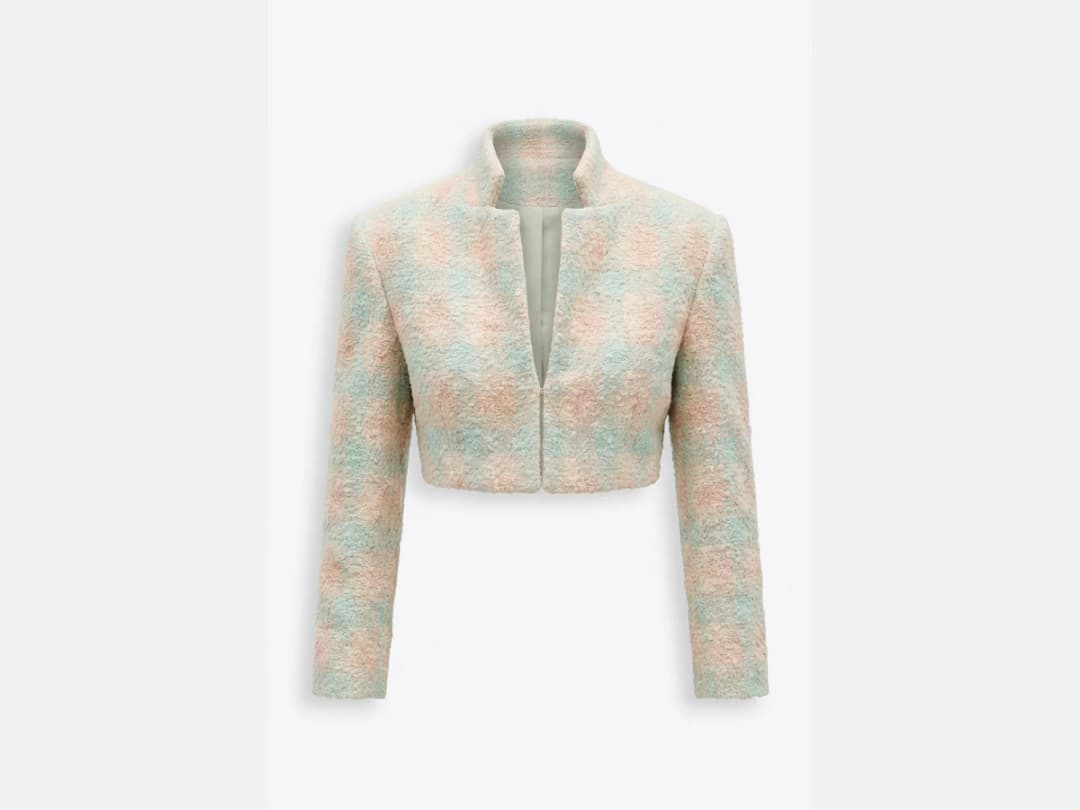
The product photo above is the only input for the image below.
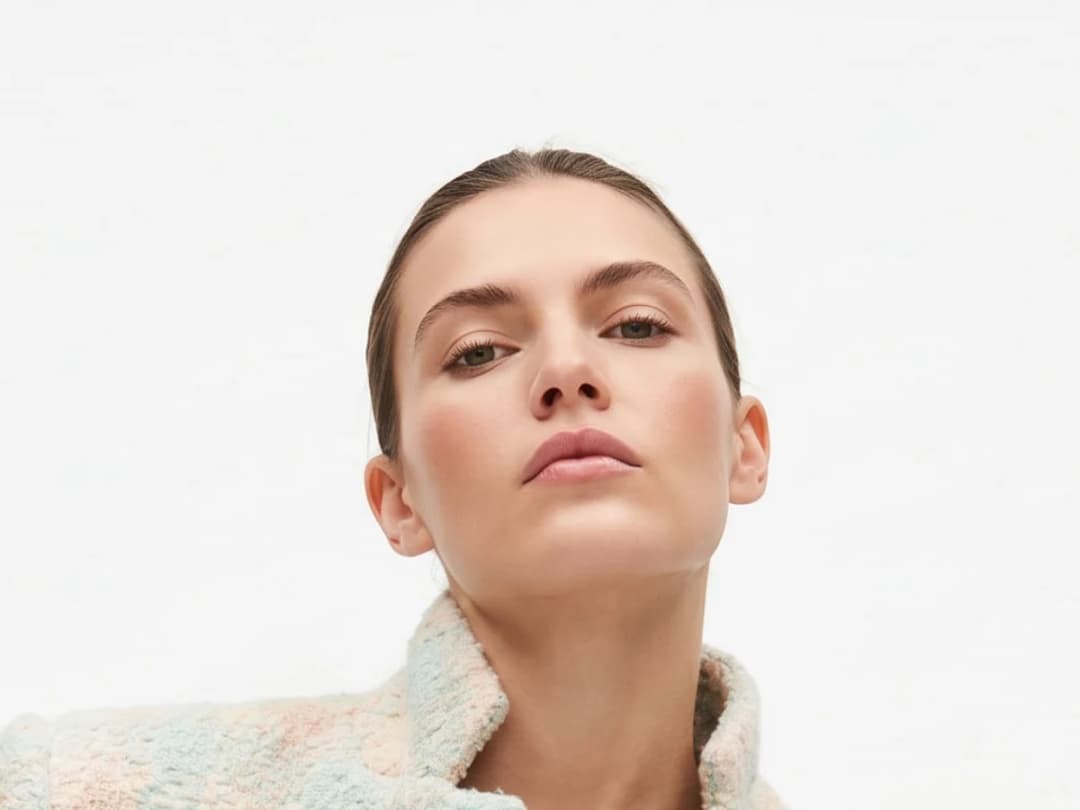
Step 2: choose who wears it, deliberately. The panel sets gender, age from 3 to 60, body shape (small, mid, plus size, pregnant), framing and camera angle. Use it to show the range your shoppers actually are, and say so plainly on the page rather than presenting it as a statement.
Step 3: keep one model across the collection. A consistent model is what makes a catalogue read as one shoot, the thing H&M and Zalando built digital twins for. In the studio a model reference, one photo reused across Product to Model, virtual try-on and bulk generation, keeps the same person on every product; see consistent AI models. If that reference is a real person, it must be someone who has agreed and been paid, exactly as in the H&M case.
Step 4: run the catalogue, not the hero shot. Bulk generation tries one model on up to thirty products at once, which is where the Zalando kind of time saving comes from. Bulk is available from the Pro plan.
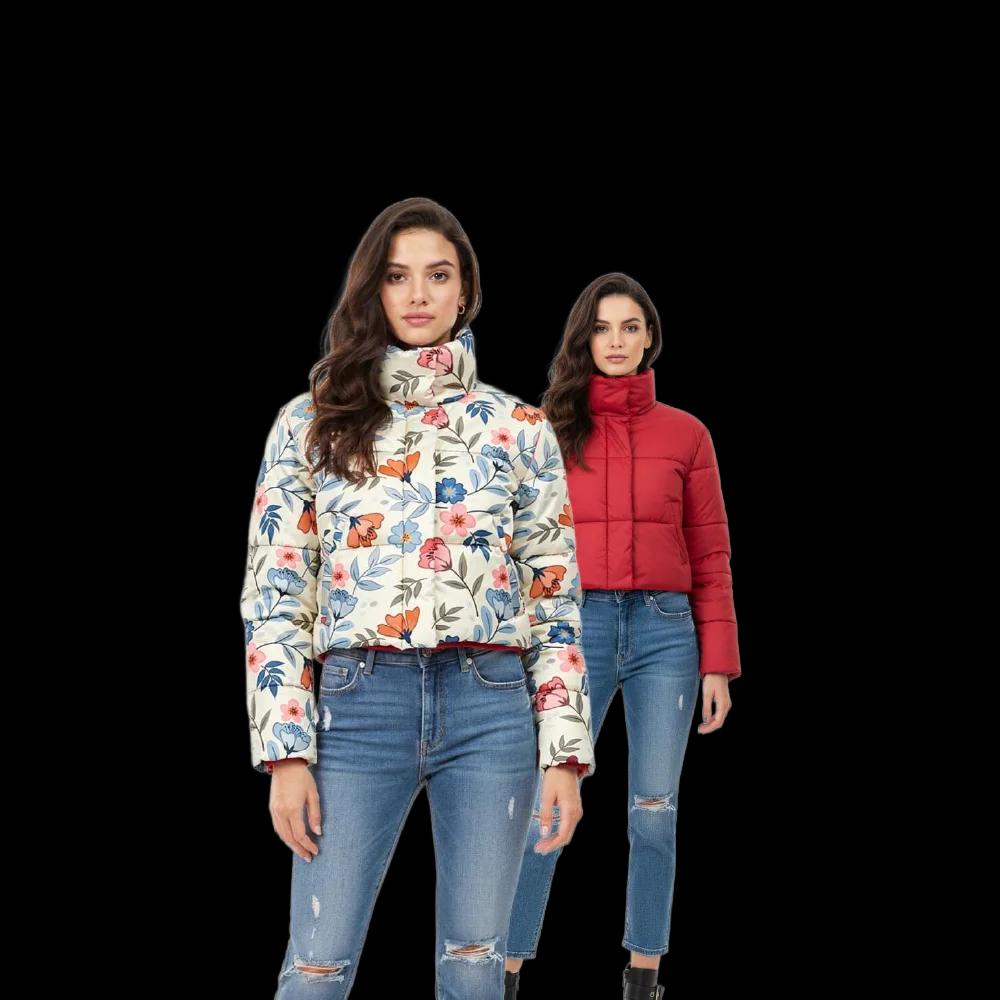
Step 5: adapt an existing photo instead of reshooting. If you already have a good shoot and need the same look on another person, for another market or another size range, change the model and keep the clothes: the outfit, folds and light stay as they were shot.
Step 6: check, label, publish. Compare every image with the garment: length, print, buttons, colour. Discard what drifts. Add a short line such as "Images created with AI from photos of the real product" on the product page or the post. Then publish where shoppers expect product images first, the store and the listings, before trying campaign imagery.
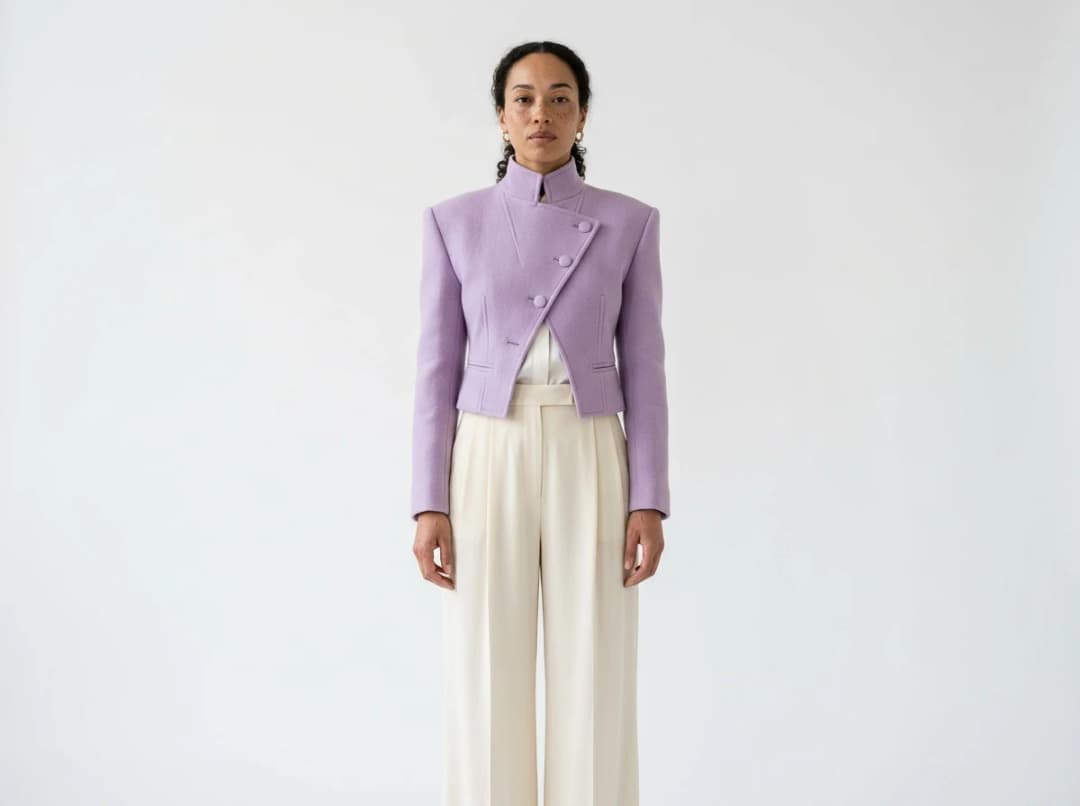
Worked example: a 20 piece capsule, priced
A small brand launches a capsule of 20 pieces and wants four on-model images of each, on the same model: full body front, upper body, back, and a detail worn. That is 80 images. On The New Black AI each Product to Model image costs 1 credit on Standard AI, 3 on Pro AI, and 7 on Ultra AI in 4K (Ultra and 4K from the Pro plan). Plans read in November 2026: Starter $15 a month for 200 credits, Pro $35 a month for 500 credits, every workflow open on every plan.
- Standard AI: 80 images × 1 credit = 80 credits. On Starter that is 80 of 200 credits, with 120 left for retakes or a second colourway; at $15 for 200 credits, each image works out at about $0.08.
- Pro AI: 80 × 3 = 240 credits. That is more than Starter's 200, so Pro at $35 for 500 credits fits it with 260 credits left; each image works out at 3 × $0.07 = $0.21.
- Ultra AI in 4K for the hero images: 20 hero shots × 7 credits = 140 credits on top, on the Pro plan.
- Retakes: if one image in five is redone once on Pro AI (an assumption, not a measured rate), add 16 × 3 = 48 credits. Pro AI for all 80 plus the retakes plus 20 Ultra heroes is 240 + 48 + 140 = 428 credits, inside one month of Pro.
A new account opens with free credits at signup, enough to test the workflow on a few of your own pieces before choosing a plan. The real cost, as every case above shows, is not the credits but the time spent checking each image against the garment, which no price list includes.
Sources
Each page below was read in November 2026.
- NBC News, "Backlash against AI supermodels triggers wider fears in fashion workforce" (30 April 2023), https://www.nbcnews.com/business/business-news/ai-models-levis-controversy-backlash-rcna77280
- CNN, "Your favorite model? Thanks to AI, they might not be real" (31 July 2025), as syndicated by KVIA, https://kvia.com/news/2025/07/31/your-favorite-model-thanks-to-ai-they-might-not-be-real/
- PR Newswire, "Revolve pioneers first ever AI generated billboard campaign" (3 April 2023), https://prnewswire.com/news-releases/revolve-pioneers-first-ever-ai-generated-billboard-campaign-301788766.html
- FashionUnited, "Revolve unveils AI generated billboard campaign" (April 2023), https://fashionunited.uk/news/fashion/revolve-unveils-ai-generated-billboard-campaign/2023040468800
- blue News, "Mango now only uses AI models to advertise teen fashion" (2024), https://www.bluewin.ch/en/news/mango-now-only-uses-ai-models-to-advertise-teen-fashion-li.2306096
- Reuters via The Star, "Zalando uses AI to speed up marketing campaigns, cut costs" (7 May 2025), https://www.thestar.com.my/tech/tech-news/2025/05/07/zalando-uses-ai-to-speed-up-marketing-campaigns-cut-costs
- Zalando, "Zalando Strategy in Action: Entering a new era of emotional commerce" (9 July 2025), https://corporate.zalando.com/en/node/10800
- FashionUnited, "H&M to create twins of models with AI: The possibilities are almost endless" (March 2025), https://fashionunited.uk/news/fashion/h-m-to-create-twins-of-models-with-ai-the-possibilities-are-almost-endless/2025032880819
- FashionUnited, "H&M turns to AI digital twins in new campaign, as fashion grapples with blurred realities" (July 2025), https://fashionunited.uk/news/fashion/h-m-turns-to-ai-digital-twins-in-new-campaign-as-fashion-grapples-with-blurred-realities/2025070482637
- ABC News, "Controversy stirs over AI generated models in new Guess ads appearing in Vogue" (1 August 2025), https://abc7news.com/post/controversy-stirs-ai-generated-models-new-guess-ads-appearing-vogue/17390923/
- Good Morning America, same story (1 August 2025), https://www.goodmorningamerica.com/Style/story/controversy-stirs-ai-generated-models-new-guess-ads-124271323
- ContentGrip, "Valentino taps AI to elevate new Vans collab into surreal couture campaign" (26 September 2025), https://www.contentgrip.com/valentino-vans-ai-campaign/
- Startups.co.uk, "Fashion brand is the latest business to be criticised for AI advert" (3 December 2025), https://startups.co.uk/news/valentino-ai-campaign-backlash/
- Glossy, "Luxury fashion's AI marketing experiments hit a turning point" (24 December 2025), https://www.glossy.co/fashion/luxury/luxury-fashions-ai-marketing-experiments-hit-a-turning-point
- Outlook Luxe, "Gucci sparks backlash after using AI models for Milan Fashion Week campaign" (26 February 2026), https://luxe.outlookindia.com/fashion-beauty/couture/gucci-sparks-backlash-after-using-ai-models-for-milan-fashion-week-campaign
Frequently asked questions
Which fashion brands have used AI generated models?+
Publicly documented cases include Levi's (2023 test), Revolve (2023 billboard campaign), Mango (2024 teen line), Zalando (most of its editorial campaign images in late 2024), H&M (digital twins of 30 real models in 2025), Guess (a Vogue print ad in 2025), Valentino (two AI campaigns in 2025) and Gucci (AI images before its February 2026 show). Hugo Boss has also said it uses AI imagery in its e-commerce.
Was Guess the first brand with an AI model in Vogue?+
It was the AI model ad in American Vogue that drew the most attention, in the August 2025 print issue. Condé Nast said no AI model has ever appeared editorially in Vogue: the Guess page was an advertisement, created by the agency Seraphinne Vallora.
What are AI digital twins of models?+
AI replicas of real models, built with their agreement, that can be placed in new images without a new shoot. H&M announced twins of 30 models in 2025, with the models keeping control over use and paid as for a photo; Zalando is building twins too.
Do shoppers accept AI fashion models?+
On product pages and in clearly labelled uses, the documented cases drew little reaction. In magazines and luxury campaigns the reaction was often negative, even when the images were labelled, as with Valentino and Gucci. Getty research cited by FashionUnited found almost 90% of consumers want AI images disclosed.
Do I have to label AI generated model photos?+
Rules vary by country and by platform, so check the ones that apply to you. The cases above suggest labelling clearly in any case: the brands that labelled were criticised on taste, never accused of deceiving anyone, while Guess's small print became the story.
How much does an AI on-model image cost compared with a photoshoot?+
Zalando said AI cut its imagery costs by 90% and its production time from weeks to days. On The New Black AI one on-model image is 1 credit on Standard AI or 3 on Pro AI, so 80 images of a 20 piece capsule fit in one month of Starter ($15 for 200 credits) at Standard, or of Pro ($35 for 500 credits) at Pro AI.
Can AI generate models wearing my own clothes?+
Yes, that is the most common use: you upload a photo of the real garment and the AI builds the model image around it, as Mango did for its teen line. In The New Black AI it is the Product to Model workflow in AI generated models, or virtual try-on when you want a garment on a chosen person.
Can I keep the same AI model across a whole collection?+
Yes. A model reference, one image of the model reused on every product, keeps the same person across the catalogue, and bulk generation applies it to up to thirty products at once from the Pro plan. If the reference is a real person, have their written consent and pay them, as H&M does with its digital twins.
Related articles
- Best Shopify Agencies for Fashion Brands in the US (2026)The 10 best Shopify agencies for fashion brands in the US: location, Shopify partner tier, fashion clients and which brand each one suits. Updated Nov 2026.
- Best Shopify Agencies for Fashion Brands in Asia (2026)The 10 best Shopify agencies for fashion brands in Asia: Hong Kong, Japan, Korea, India, Southeast Asia. Partner tier, fashion clients, who each one suits.
- Best Shopify Agencies for Fashion Brands in Europe (2026)The 10 best Shopify agencies for fashion brands in Europe: UK, France, Nordics, Netherlands, Germany, Italy. Partner tier, fashion clients, who each suits.
- 10 Best AI Ad Generators for Clothing Brands (2026)Ten AI ad generators compared for clothing brands: what each fits, prices read November 2026, a month of fashion ads priced, and which ones run Meta and Google.
- 9 Best Claid Alternatives for Fashion Brands (2026)9 Claid alternatives for clothing brands, November 2026: who each fits, cost per on-model image, API, ghost mannequin, video and Shopify, a catalogue priced.
- 9 Best WearView Alternatives in 2026 (Compared)9 WearView alternatives compared, November 2026: who each fits, real 4K price per image, video on the entry plan, free start and Shopify, a month priced.
- 8 Best Photoroom Alternatives in 2026 (Compared)8 Photoroom alternatives for clothing brands, November 2026: who each fits, 2K and 4K fashion prices, API, Shopify and video, with a 60-piece season priced.
- 8 Best AI Fashion Video Generators in 2026 (Compared)Eight AI fashion video generators compared for clothing brands: what each fits, prices read November 2026, the cost of a 10 second clip, length and API.
- 8 Best AI Fashion Model Generators for Brands (2026)8 AI fashion model generators compared for clothing brands, November 2026: who fits what, price per image read on each site, a 300-SKU season priced.
- 10 Best AI Fashion Studios for Brands in 2026 (Compared)10 AI fashion studios compared (Nov. 2026): what each holds (design, photos, video, tech packs, Shopify), team seats, prices, and a 20-piece month priced.