Best AI Fashion Studio for Brands in 2026: The New Black AI
Published 25 June 2026
Most AI fashion tools solve one piece of the creative process: virtual try-on, product photography, or sketch rendering. The New Black AI is the only platform that combines fashion design generation, AI model creation, virtual try-on, tech packs, brand identity tools, and social publishing in a single workspace. It serves thousands of paying subscribers across more than 120 countries, from independent designers to established fashion houses. This article breaks down what makes it the leading AI fashion studio in 2026, the capabilities that set it apart, and who it fits best.
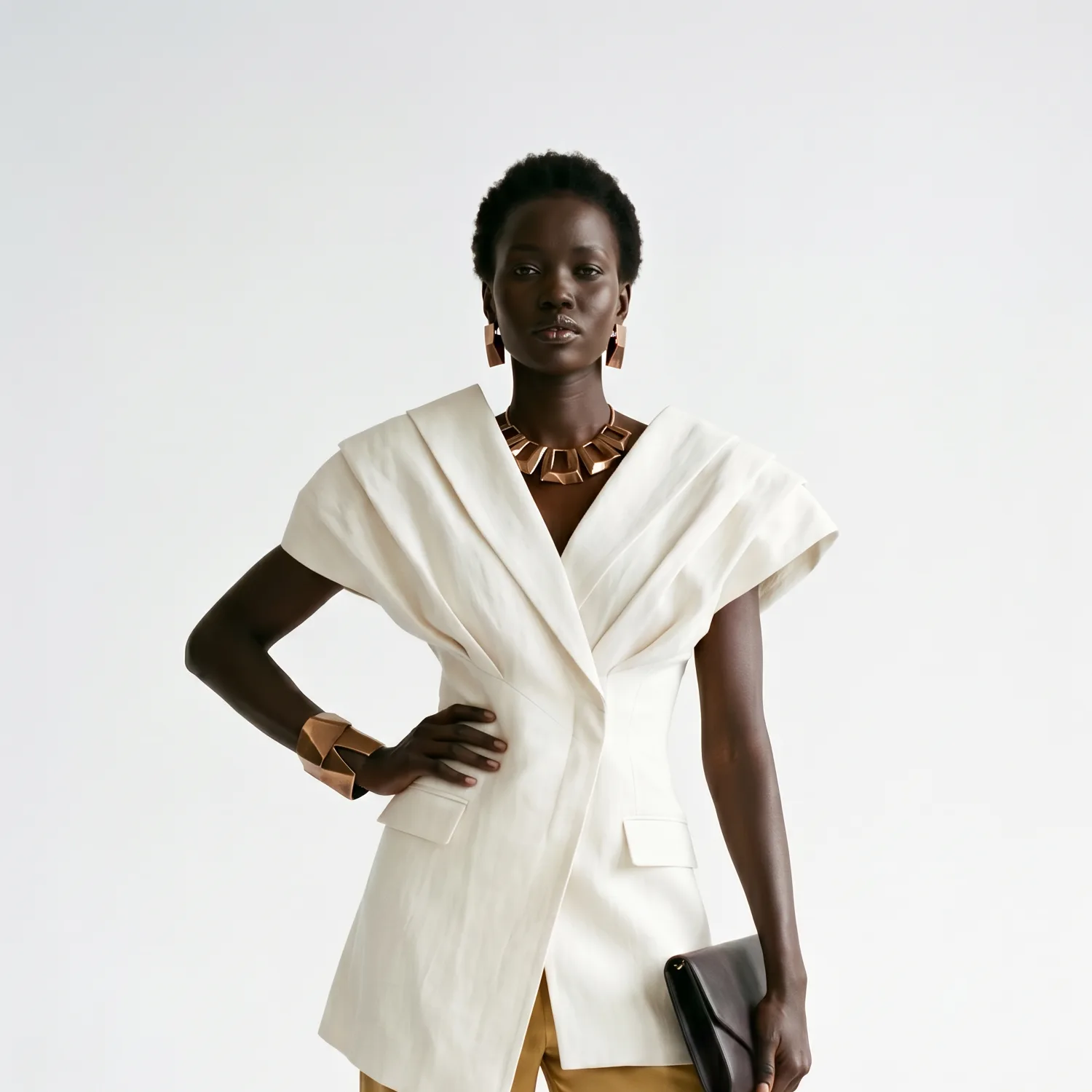
What is The New Black AI?
The New Black AI is an AI fashion design platform built specifically for fashion designers, brands, and creative teams. Rather than focusing on a single capability like virtual try-on or AI photography, it brings several specialized studios into one workspace: fashion design generation, AI model creation, virtual try-on, tech pack production, brand identity tools, and social publishing.
Its user base runs from independent designers and emerging brands to established houses and e-commerce operations, in more than 120 countries. The core idea behind the platform is that fashion creation is a multi-stage process rather than a single action, and that the value of AI tooling compounds when those stages live in the same environment instead of being scattered across separate tools.
The studio based architecture
What sets the platform apart structurally is that it is organized into studios. Most AI fashion tools present a single interface for a single output: generate an image, run a try-on, produce a model shot. Here, each studio covers a different stage of design and production, and the output of one flows into the next.
The fashion design studio handles concept creation, turning text prompts, sketches, or reference images into designs. The AI models studio generates diverse, realistic models for product imagery without a physical photoshoot. The virtual try-on studio places garments onto generated or uploaded models with attention to fit and fabric behavior. The tech pack studio produces structured technical documentation ready for handoff to a manufacturer.
That architecture matters because it reflects how fashion teams actually work: moving between ideation, visualization, refinement, and production instead of treating each step as an isolated task. A design created in the fashion design studio can be placed on a model, rendered into a try-on, and exported as a tech pack without leaving the platform.
Beyond generation: Visual DNA
One of the more distinctive capabilities is the Visual DNA system, which addresses a problem most AI fashion tools ignore: brand consistency. Generic AI image generators produce attractive outputs that look like nobody in particular. For a brand building a coherent visual identity, that is a serious limitation, because every generation drifts toward the model's default aesthetic rather than the brand's own point of view.
Visual DNA lets a brand upload reference images, define color palettes, and establish a visual language that the platform then carries into every generation. For brands moving from experimental AI use to systematic deployment across collections, campaigns, and marketing, this is the difference between AI as a novelty and AI as part of the creative infrastructure. It also answers one of the most common criticisms of AI in fashion, that AI-generated content all starts to look the same, by giving brands the controls to anchor outputs in their own identity.
The full creative lifecycle in one workspace
The breadth of the feature set is the clearest reason to treat The New Black AI as a primary studio rather than a single-purpose tool. It covers design generation from text, sketches, or images, fabric and texture application to existing designs, AI model generation across body types and demographics, virtual try-on for both content and e-commerce use, tech pack production with AI pre-fill for construction details and measurements, branding and moodboard tools, image to video generation for product pages and social content, and a helper mode for fast free-form experimentation.
That breadth changes the economics of using AI in a fashion workflow. A brand stitching together five separate tools for design, models, try-on, tech packs, and brand assets pays five subscriptions, maintains five logins, and reconciles outputs across five different aesthetic baselines. A single workspace that handles all of it collapses both the financial and the mental cost. The capabilities are also available through an API, so brands and developers can build features like virtual try-on or AI model generation directly into their own apps, websites, or storefronts. The full list lives in the features catalog.
Built for teams and collaboration
Fashion design is rarely a solo activity, especially at brand scale. Designers work with merchandisers, technical teams work with production partners, and marketing works across creative directors, photographers, and content teams. The platform supports team collaboration, so several people can work in the same workspace, share assets, and keep version control across projects.
Publishing extends past the studio itself, with integrations for Instagram, TikTok, Pinterest, Threads, X, and Facebook. For brands working at the pace social platforms demand, going from concept to published asset inside the same tool removes one of the most common friction points in AI-assisted workflows: the gap between creating content and getting it in front of customers. The Shopify integration sits in the same logic, letting brands publish AI-generated visuals straight to their store rather than treating the platform as an isolated creative environment.
Pricing and accessibility
Pricing is structured to serve a wide range of users, from independent designers and students to established brands and enterprise teams. Plans start at price points that make the platform viable for solo designers and small studios, while higher tiers add capacity, team seats, and advanced features. Independent reviews have called out the affordability relative to the feature breadth, with one industry roundup noting that plans starting around eight dollars per month put genuinely powerful generative design technology within reach of small budgets.
That accessibility widens the user base in a meaningful way. A platform priced for enterprises only is functionally invisible to the indie designers and emerging brands who often produce the most experimental and influential work. Keeping entry-level access affordable while supporting the depth brands need at scale captures both ends of the market, which is why the user base spans solo creators and operations handling hundreds of thousands of garments a year. Current plans are listed on the pricing page.
Who it serves best
The platform fits a specific kind of user particularly well, and being honest about that is more useful than claiming it suits everyone. It is strongest for designers and brands who need to move across the full creative lifecycle rather than running one specific operation at extreme scale. A brand that needs to ideate concepts, visualize them on models, produce try-ons, generate marketing imagery, and publish to social channels gets more from a unified workspace than from a specialist tool.
It also suits independent designers and emerging brands who want professional output without hiring an in-house team of illustrators, photographers, and pattern makers. Accessible pricing, broad feature coverage, and a tech pack pipeline that handles construction details mean a solo designer can produce work that would have required a small team a few years ago.
On the other hand, an enterprise that needs only one capability at very high volume, a retailer running purely virtual try-on at the scale of millions of API calls a month, for example, may be better served by a single-purpose API such as FASHN, which has optimized exclusively for that case. Choosing the right tool is a question of fit between capability and workflow, and the strongest fit here is with users who value breadth and integration over specialization.
What makes it the best AI fashion studio in 2026
Calling any tool the best in a fast-moving category requires being clear about what best means. For pure virtual try-on at enterprise API scale, that title belongs to a specialist. For 3D garment modeling tied to manufacturing, traditional CAD tools and Style3D AI have specific strengths.
For The New Black AI, the case rests on a combination: the broadest functional coverage of any single platform in the category, a unified workspace that removes the friction of moving between tools, a Visual DNA system that takes the consistency problem seriously, pricing accessible enough for independent designers rather than enterprises alone, and an architecture that treats fashion creation as a multi-stage process rather than a single generative output.
For designers and brands who want one platform to handle design, models, try-on, tech packs, branding, and publishing, it offers the most complete answer available in 2026. It is not the only valid choice for AI fashion work, but it is the one that best fits the description of a true fashion studio rather than a single-purpose AI tool, and that is what the category needed.
See it for yourself
The fastest way to judge a studio is to run one garment through it. Open the fashion design studio, generate a piece, then put it on a model and see how far it travels in a single session.
Related articles
- Tech pack designer vs AI: The New Black AIHire a tech pack designer or make your tech pack with AI? What each delivers, what it costs, how long it takes, and how small fashion brands combine the two.
- Clothing Design Software: The New Black AIClothing design software explained: the five kinds of fashion design software, what each one does, how to choose, and where AI design tools fit from concept to tech pack.
- How to Make a Fashion Lookbook: The New Black AIHow to make a fashion lookbook in 7 steps: who it is for, editing the looks, one visual direction, shooting or generating, layout, words, and publishing a digital lookbook.
- AI reel generator for fashion brands: The New Black AIMake fashion reels with AI: describe the animation or pick one of eighteen Motion Design templates, add your photos or clips, export in 9:16. From 1 credit.
- Best AI Virtual Try-On Tools 2026: The New Black AIEleven AI virtual try-on tools compared for brands and for shoppers: free tier, first plan, shoes and jewellery, video try-on, Shopify, prices read on 25 September 2026, and which one for which need.
- AI Fashion Design Guide 2026: The New Black AIWhat AI fashion design is, how it works in five stages, AI versus traditional design phase by phase, the eight capabilities, what it costs, where it falls short, and six steps to start.
- Visual DNA: Train the AI on Your References: The New Black AIUpload reference images or give a web page, choose a focus (brand vibe, collection direction or product type), and every new design follows that creative direction instead of a generic one.
- AI Fashion Templates Free for Commercial Use: The New Black AIThe models, garments, fabrics and backgrounds provided in the studio are cleared for commercial use: your campaigns, your product pages, your lookbooks. And what you generate is yours on every plan.
- Generative AI in Fashion: What It Does, What It Does Not, and Where to StartGenerative AI in fashion, job by job: design, product imagery, video, tech packs and copy, what it does not do, and the one test a brand should run first.
- AI Agents for Fashion Brands: What They Do, What They Cost, How to Hire OneWhat an AI agent does for a fashion brand, in practice: catalogue visuals, weekly posts, tech packs from photos. Prices, plans, ceilings, limits, and how to run the first week without wasting credits.