White Label Clothing: The New Black AI
Published 9 October 2026
White label clothing is clothing a manufacturer already makes, which you buy plain and sell under your own brand name. The cut, the fabric and the pattern belong to the supplier; your brand adds the label, the print, the embroidery and everything the customer sees. It is the fastest way to launch a clothing line without designing every piece from scratch. This guide explains how white label clothing works, how it differs from private label, and how to turn blank garments into a brand people recognise.
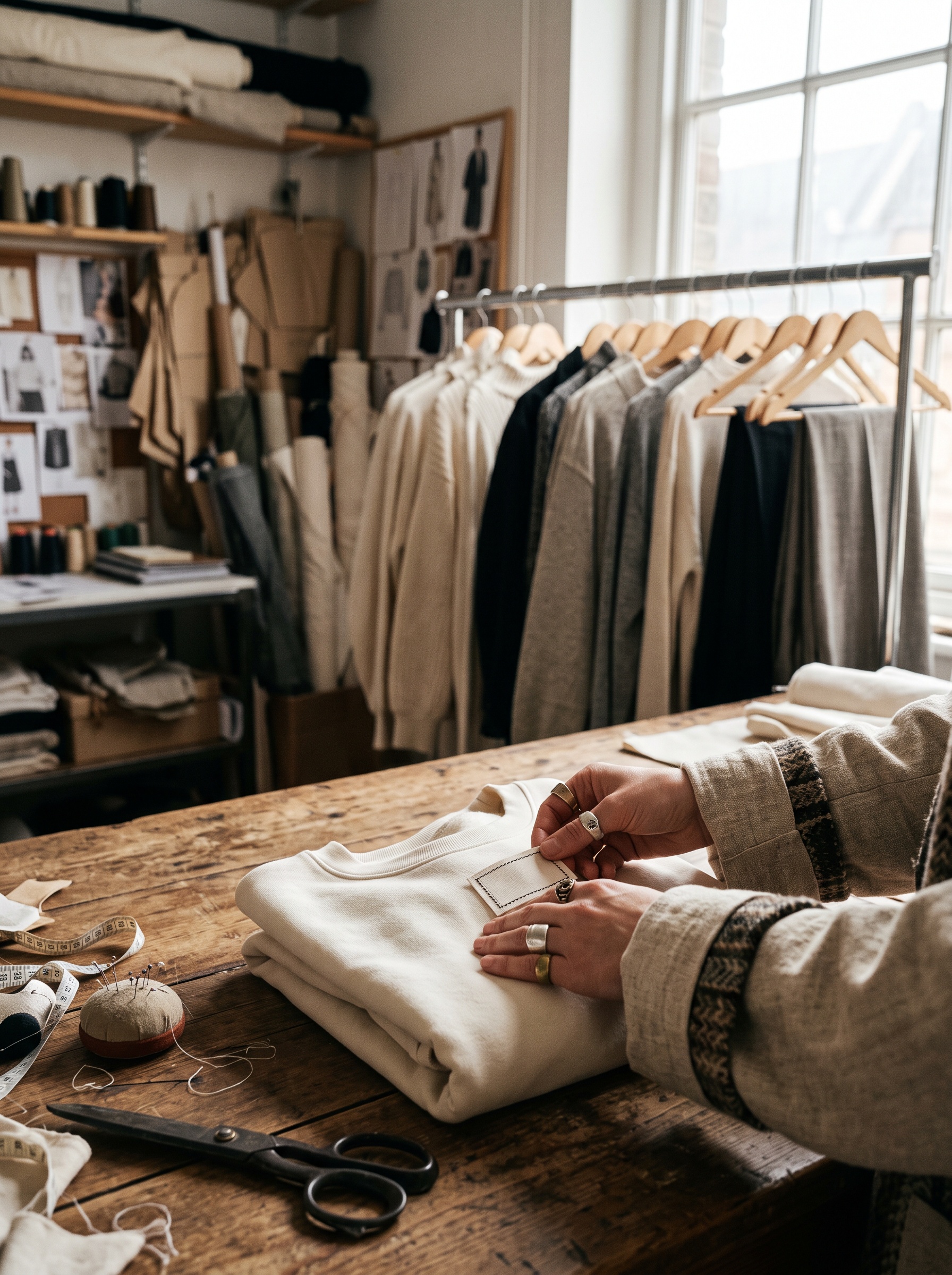
How white label clothing works
A white label supplier produces standard garments in volume: t-shirts, hoodies, sweatpants, caps, basics. You choose the models and colours from their catalogue, order them, and customise them before they reach your customer. The customisation can be light, a new neck label and a hang tag, or full, with prints, embroidery, dyes and custom packaging.
Because the garments already exist, there is no pattern making, no sampling of a new design and usually a lower minimum order than a factory making your own pieces.
White label vs private label
| White label | Private label | |
|---|---|---|
| Who designs the garment | The supplier | You (or the supplier to your brief) |
| What you change | Label, print, embroidery, packaging | The pattern, fabric, fit and details |
| Minimum order | Low, sometimes a few pieces | Higher, set by the factory |
| Time to launch | Weeks | Months |
| How unique the product is | Low: others can sell the same blank | High: the piece exists only for you |
Many brands start with white label to test their audience and their name, then move their best sellers to private label once they know what sells.
The pros and cons
What it does well: a fast launch, a small first investment, proven garments with known quality and sizing, and room to focus on the brand rather than on production.
What to watch: the same blank can be sold by many brands, so the product alone does not set you apart; margins are thinner when you buy finished garments; and you depend on the supplier's stock and colours.
How to start a white label clothing line
1. Pick your niche and your customer. A white label hoodie sells on the brand around it, so decide who it is for before choosing anything. 2. Choose a supplier and order samples. Check the fabric weight, the fit across sizes, the colour range and the reorder times. 3. Design what goes on the garment. Prints, graphics and embroidery are your product. Create and test them on screen: place your logo on the garment, try prints with a textile and pattern generator, and keep the versions people prefer. 4. Add your labels and packaging. A woven neck label, a care label with your name and a simple branded bag already change how the piece feels. 5. Shoot or generate the visuals. Blank garments look alike in a supplier's catalogue; your photos are what make them yours. AI model photos show each design worn, in your style, without a shoot for every colour. 6. Open the store and launch. Start with a small range, listen to the first customers, and reorder what sells.
When a piece proves itself, a tech pack is how you brief a factory to make your own version of it, the step from white label to private label. The broader guide to creating a clothing brand covers the rest of the launch, budget included.
Frequently asked questions
What does white label clothing mean?+
It means garments made by a manufacturer in standard models, which you buy plain and sell under your own brand, after adding your labels, prints or embroidery.
What is the difference between white label and private label clothing?+
With white label, the supplier designs the garment and you customise it; with private label, the garment is made to your own design or brief, usually with higher minimums and a longer lead time.
Is white label clothing a good way to start a brand?+
It is a fast and affordable start, especially to test a niche. The product is not unique on its own, so the brand, the designs on the garments and the visuals have to make the difference.
Can I put my own label on white label clothing?+
Yes. Replacing or adding neck labels, care labels and hang tags with your brand is the most common customisation, often offered by the supplier or by a local printer.
How do I make white label clothing look unique?+
Through what you add: original prints and embroidery, your colours, your labels and packaging, and visuals that show the pieces in your own style on models your customers relate to.
Related articles
- Clothing Design Software: The New Black AIClothing design software explained: the five kinds of fashion design software, what each one does, how to choose, and where AI design tools fit from concept to tech pack.
- Clothing mockup generator with AI: The New Black AIMake clothing mockups with AI: your logo or print set into the fabric, following its folds, then worn by a model, as a ghost mannequin or flat lay. 1 credit a step.
- AI Fashion Design Guide 2026: The New Black AIWhat AI fashion design is, how it works in five stages, AI versus traditional design phase by phase, the eight capabilities, what it costs, where it falls short, and six steps to start.
- AI Fashion Models, How They Are Made: The New Black AIAI fashion models explained: how a product photo becomes an on-model image, what one image costs in credits, and when a brand should use them instead of a shoot.
- Change the Outfit in a Video with AI: The New Black AIMake the jacket red, change the print, replace the top: the clothing in your video changes with a sentence and the person, movement and background stay as filmed.
- AI Model Walk Video from One Photo: The New Black AIOne photo of your model, one sentence about the movement, and the look walks. From 5 to 30 seconds, so a whole line can move instead of three pieces.
- What Is a Tech Pack? The Complete Guide for Clothing BrandsWhat a tech pack is, what it contains section by section, who makes it and when, how to make one from a blank page or from photos with AI, and a free template.
- What is Y2K Fashion: The New Black AIWhat is Y2K fashion: the style of the years around 2000, its key pieces, outfits for women and men, how it differs from the 90s, and how a brand designs a Y2K collection.
- AI Product Photos for Shopify: The New Black AIAI product photos for a Shopify fashion store: the five shots a product page needs, how to make each from one photo, and how to publish them to Shopify without re-uploading.
- Tech pack designer vs AI: The New Black AIHire a tech pack designer or make your tech pack with AI? What each delivers, what it costs, how long it takes, and how small fashion brands combine the two.