AI Fashion Design Guide 2026: The New Black AI
Published 25 September 2026 · Updated 17 October 2026
AI fashion design is the use of generative AI to create, refine and visualise clothing and accessories: a text description, a sketch, a fabric or a product photo goes in, and a design, a render, an on-model photo, a video or a tech pack comes out, in seconds rather than weeks. This guide explains what it is, how it works, the eight capabilities behind it, what it costs, where it still falls short, and how to start.
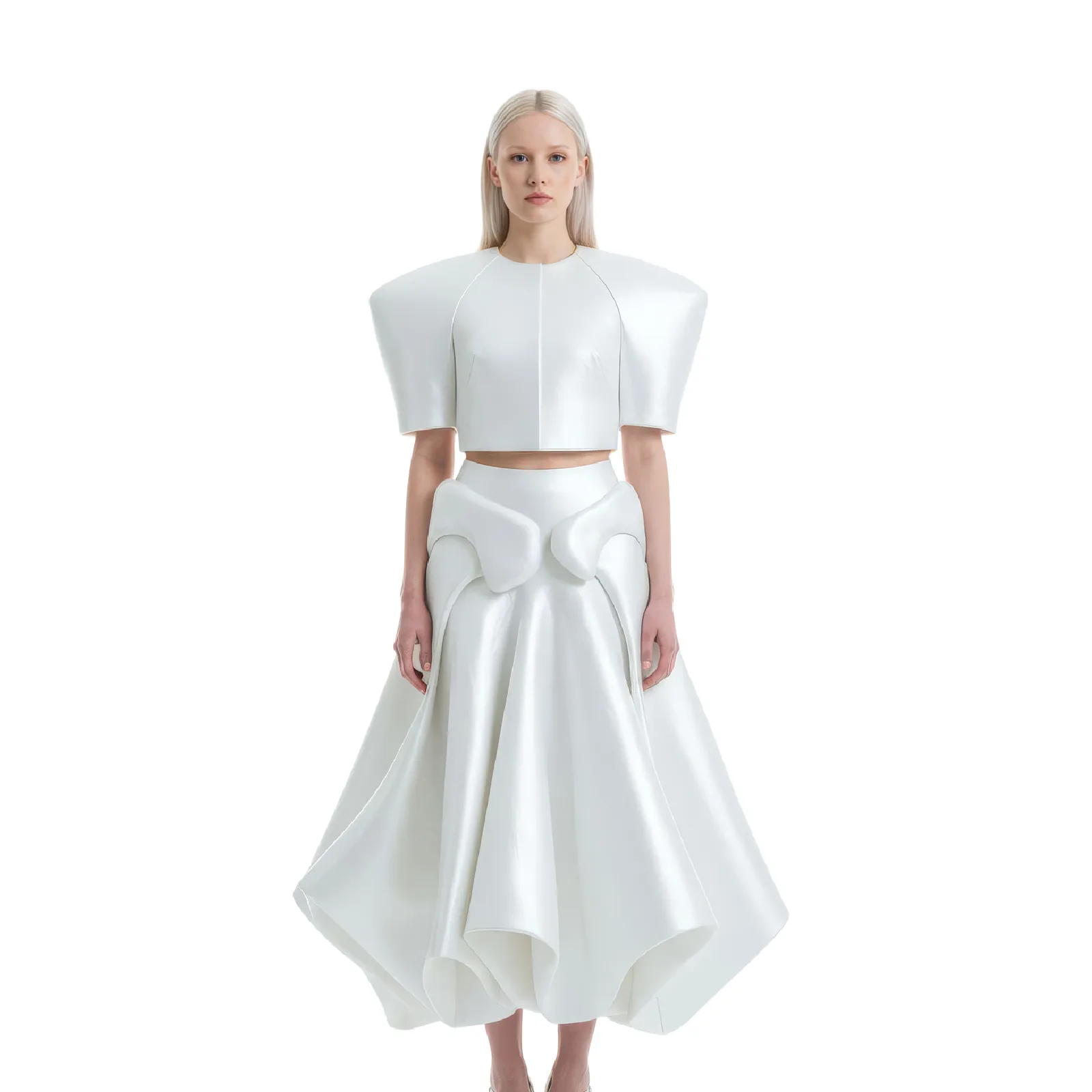
What is AI fashion design?
AI fashion design refers to software that uses generative models, diffusion models and computer vision to produce and edit fashion visuals from an instruction. Two distinctions matter. Unlike traditional design, which relies on manual sketching, physical sampling and studio photoshoots, it compresses the pipeline into a digital loop you can run twenty times in an hour. Unlike general image generators such as Midjourney, fashion-specific tools are trained and constrained on apparel: they know a raglan from a kimono sleeve, keep a print exactly where it was, and put a real garment on a model without redrawing it.
In practice it covers eight capabilities: text-to-design, sketch-to-render, virtual try-on, AI model generation, fabric and texture simulation, AI product photography, trend analysis, and technical generation (tech packs, flat sketches, patterns). Each exists as a standalone tool; a platform combines them so a design travels from concept to product page without leaving the app.
How it works, in five stages
Input. A prompt ("oversized linen blazer, cropped sleeves, earth tones"), a sketch, a reference image, a fabric swatch, a product photo. Some platforms also learn a brand's own references first, so that everything generated afterwards keeps its look; on The New Black AI that is the Visual style.
Interpretation. Computer vision and language models read the input: garment category, silhouette, construction, fabric. This is the line between fashion AI and a generic generator.
Generation. A diffusion model produces the image, guided by the input and by what it learned from fashion imagery. Specialised platforms add controls on top: garment preservation, body proportion, brand consistency, the option of Standard or Pro quality.
Refinement. Change the colour, swap the fabric, move the model, paint a zone and describe what replaces it. This loop is where the time is saved.
Output. A concept, a product image, a video, an HD file, a 3D model, a tech pack, published to a store or a social account, or exported for Illustrator, Photoshop or a PLM.
AI versus traditional design, phase by phase
| Phase | Where AI is stronger | Where the traditional way still wins |
|---|---|---|
| Concept exploration | Twenty silhouettes in an hour, from a sentence | The designer's eye deciding which one matters |
| Fabric choice | Seeing one design in silk, denim and knit before any sample | Hand, drape and weight, which only a swatch gives |
| Product photography | On-model images from a flat lay, no shoot, minutes per product | Hero campaigns where a real face and a real place carry the brand |
| Technical design | A first tech pack drafted from photos, flat sketches with callouts | Pattern making and grading, still the pattern maker's craft |
| Iteration | Seconds per variation, one credit each | Craft refinement on the sample |
| Consistency | The same model, light and setting across a whole catalogue | A studio day that reproduces itself, at a studio day's price |
The eight capabilities, in detail
Text-to-design generation
Describe a garment, get a finished visual, choose front or front and back, on a model or product only. The quality depends on how well the model understands fashion vocabulary, from "princess seams" to "quiet luxury". Try it in the AI fashion design generator: one credit on Standard AI.
Sketch-to-render
A hand-drawn or technical sketch becomes a photorealistic garment that keeps the silhouette and construction, with colour, fabric and drape added. The reverse also exists: a photo becomes a flat sketch for the tech pack.
Virtual try-on
A real garment placed on an AI model or a chosen person, print and texture preserved. E-commerce adopted it first, for product pages and for shoppers; see the virtual try-on and the comparison of the best virtual try-on tools.
AI fashion model generation
A product photo becomes a model wearing it, with the framing, angle, age, body shape and origin you choose, and the same model kept across a collection. This is Product to Model; the guide to how AI fashion models are made and what they cost goes deeper.
Fabric and texture simulation
A fabric photo or a described print applied to a design, a seamless textile generated from words, a pattern extracted from any image. One silhouette previewed in three materials before a sample is cut.
AI product photography
Ghost mannequin, flat lay, background changes, colourways, HD upscaling, from a single photo of the garment. The complete guide to clothing product photography with AI lists every image a product page needs and how each one is made.
Trend analysis
Runway, social and sales data read for the colours and silhouettes that are coming. Useful upstream of design; it does not produce an image.
Technical generation
The step that connects design to production: a tech pack drafted from photos, flat sketches with callouts, points of measure, a bill of materials, exported to PDF for the factory.
What it costs
On The New Black AI a new account opens with 3 free credits; plans go from $15 a month for 200 credits (Starter) to $35 for 500 (Pro), $65 for 1,000 (Business) and $195 for 3,000 (Enterprise). One image is one credit on Standard AI and three on Pro AI; a ten-second video is 22 credits on Standard; a 3D model is 10. Across the market, entry plans sit between $12 and $20 a month; the comparison of AI fashion tools reads the prices of 24 of them.
Where AI fashion design still falls short
It does not know how a fabric feels. It does not grade a pattern. A hero campaign still benefits from a real shoot. Small products can come out too large on a model when the input photo fills the frame. Text on garments and fine jewellery need checking. And a generated image is only as good as the brief: the tips for writing prompts are the difference between a first try and a fifth.
How to start, in six steps
1. Pick one real product and one photo of it, flat or on a mannequin. 2. Generate its model shot with Product to Model: framing, angle, model profile, one credit. 3. Make its variations: a second colour, a second fabric, a second setting. 4. Put it in motion: a ten-second video from the model image, with sound. 5. Draft its tech pack from the photos and correct it against the sample. 6. Publish: to the Shopify product page, to the social agenda, or export.
The New Black AI gives you the whole loop in one place, trained for fashion, with a Store page that reads the results back.
Frequently asked questions
What is AI fashion design in one sentence?+
The use of generative AI to create, edit and photograph clothing from a description, a sketch, a fabric or a product photo.
Is AI fashion design the same as using Midjourney?+
No. A general generator draws a new picture each time; fashion tools keep your real garment, your print and your model consistent, and add the steps a brand needs after the image: tech pack, store, publishing.
Can AI fashion design make production-ready technical drawings?+
It drafts them: flat sketches with callouts, points of measure, a bill of materials. A person corrects the draft against the sample before the factory reads it.
How much does AI fashion design software cost?+
From about $12 to $20 a month for an entry plan across the market; on The New Black AI, $15 a month for 200 credits, one credit per image on Standard AI.
Is there a free AI fashion design tool?+
Free to try, everywhere: a few credits or a trial. Commercial-use output at full resolution is paid on every platform.
Who owns the images generated?+
On The New Black AI, you do: everything you generate is yours to sell, print and publish, on any plan. Terms differ by vendor; read them before a campaign.
Does AI fashion design work for shoes, bags and jewellery?+
Yes. Product to Model, virtual try-on and the design generator all have product types for shoes, bags, jewellery, eyewear and headwear, each with its own framing.
Will AI replace fashion designers?+
It replaces the waiting: the sample that took three weeks, the shoot that took a day. The decision of what to make, and for whom, stays with the designer.
Related articles
- Virtual Try-On for Fashion Brands: The Complete Guide (2026)How virtual try-on works, what it needs, what it costs, where it fails, and how fashion brands use it for product pages, campaigns and their own store in 2026.
- Cost to Start a Clothing Brand: The New Black AIWhat it costs to start a clothing brand in 2026: budgets by model, every line from samples to photos, and what the design, tech pack and photo work costs with AI.
- Clothing Design Software: The New Black AIClothing design software explained: the five kinds of fashion design software, what each one does, how to choose, and where AI design tools fit from concept to tech pack.
- Best AI Fashion Video Generators 2026: The New Black AIEight AI fashion video generators compared: what each starts from, the clips it makes, length and resolution, the price of a ten-second clip read on 25 September 2026, and where the video goes.
- AI Agent for a Shopify Fashion Store: The New Black AIAn AI agent for your Shopify fashion store: what it reads and does (products, images, SEO, content, ads), how you approve its actions, how to start, and what it costs.
- Generative AI in Fashion: What It Does, What It Does Not, and Where to StartGenerative AI in fashion, job by job: design, product imagery, video, tech packs and copy, what it does not do, and the one test a brand should run first.
- Best AI Fashion Studio for Brands in 2026: The New Black AIWhy The New Black AI is the best AI fashion studio in 2026: design, models, try-on, tech packs, Visual DNA and publishing in one workspace.
- Fashion Supply Chain: The New Black AIThe fashion supply chain stage by stage for a small brand: what happens, which document travels, where time and money are lost, and what now happens on screen first.
- Fashion Technology: The New Black AIFashion technology explained by stage: design, development, production, materials, marketing, sales and operations, with what a small brand should adopt first.
- White Label Clothing: The New Black AIWhite label clothing explained: how it works, white label vs private label, pros and cons, and how to start a clothing line from blank garments and make it look like your brand.