What Is a Tech Pack? The Complete Guide for Clothing Brands
Published 7 September 2026 · Updated 9 September 2026
A tech pack is the document a clothing brand hands to a factory so the garment can be made exactly as designed. It gathers, in one place, everything the factory needs and nothing it has to guess: the flat sketch with its callouts, the points of measure with a size run and tolerances, the bill of materials, the colourways, the construction notes and the finish. One garment, one tech pack, one truth shared by the designer, the pattern maker, the supplier and the quality controller.
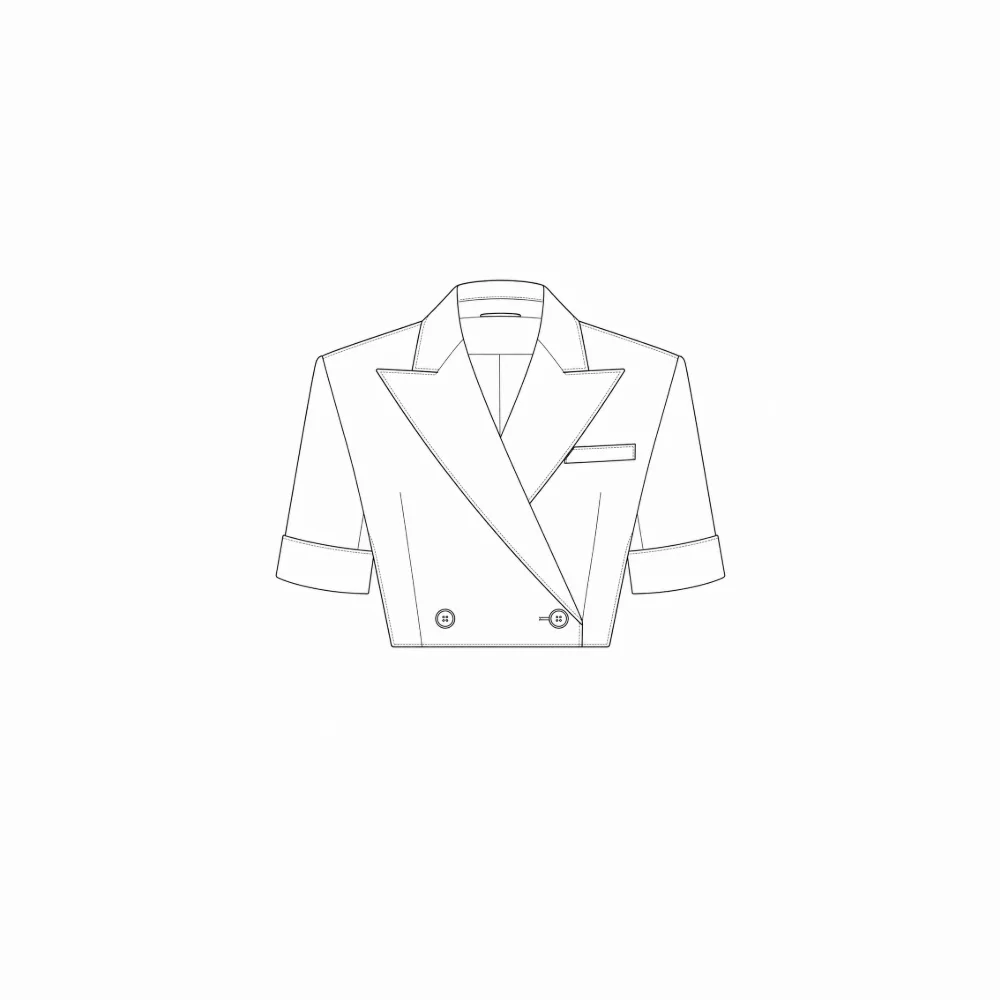
Why a tech pack exists
A factory does not make a garment from a photo, a mood board or a phone call. It makes it from numbers and drawings. Without a tech pack, every question the factory has becomes an email, every assumption becomes a sample that comes back wrong, and every wrong sample costs two to four weeks. With a tech pack, the first sample is close, the second is right, and the price you are quoted is the price you pay, because the factory knew what it was pricing.
That is why the tech pack is the contract of production. It is also the memory of the brand: three seasons later, the same document tells you what the good version was.
What a tech pack contains, section by section
A tech pack is organised in pages, and each page holds sections. The names below are the usual ones, and a good tool lets you rename any of them to match how your team already works.
Header: the identity of the style
Style name and style code, season, category, designer, date, version. The header is what the factory reads first and what it prints on the sample tag. Two garments can share a fabric or a fit; they never share a style code.
Description and construction
A short paragraph on what the garment is, then the construction details a drawing cannot carry: seam types, stitch density, topstitching, interfacing, closures, how the hem is finished, where the label goes. This is where the words "as per sample" cost money. Write what you mean.
Flat sketch with callouts
The technical drawing, front and back, drawn flat, with lettered callouts pointing at every detail that has a measurement or a construction note. The callout letters are the bridge between the drawing and the tables: A on the sketch is line A of the size chart.
Points of measure and grading
A table with one line per measurement: the code, the name, the value for each size in the run, and the tolerance the factory is allowed. Chest at one inch below armhole, body length at centre back, sleeve length from shoulder point: every line names where the tape goes, because two people measuring "the chest" in different places get two different garments. Grading is the step between sizes, and it is what turns one sample size into a full run.
Bill of materials
One line per component: shell fabric, lining, interfacing, thread, zips, buttons, drawcords, labels, hangtags, packaging. For each, the supplier or reference, the composition, the weight, the colour, the placement, and the consumption per garment. The bill of materials is what the factory prices and orders. A missing line here is a phone call at the worst possible moment.
Colourways
The garment in each colour it will be produced in, with a colour reference the mill can match: a Pantone code, a lab dip number, a swatch. One colourway per column, every component that changes colour listed.
Notes and finish
Washing, pressing, folding, labelling, packing, and anything the factory should know before it starts. This is also where you write what must not happen, which is often the most useful line in the document.
Who makes the tech pack, and when
In a large brand, a technical designer writes it after the designer signs off the sketch and before sampling starts. In a small brand, the founder writes it, often the night before the factory asks for it. In both cases the order is the same: sketch, then tech pack, then sample, then corrections written back into the tech pack, then production. A tech pack that is not updated after the fit session is a tech pack that will reproduce the mistake.
Tech pack vs spec sheet
A spec sheet is one table: the measurements of one garment in one size, sometimes with grading. A tech pack contains the spec sheet and everything around it: the drawing, the materials, the colours, the construction, the packing. If you send a factory a spec sheet only, they will ask for the rest, or they will guess.
How to make a tech pack
There are four ways to start, and the right one depends on what you already have.
Start from a blank page
A blank pack with the standard sections, filled by hand. It costs nothing and it is the way most first tech packs are made. Draw or upload the flat, place the measurement arrows, type the tables.
Start from photos of the garment
If the garment exists, as a sample or as a competitor's piece you are reworking, the fastest route is to let an AI read the photos and draft the pack: the flat sketch, the construction description, a first bill of materials and a first set of measurements to correct. In our tech pack studio this costs one credit for the draft plus one per sketch, and the draft is meant to be corrected, not signed.
Import a tech pack you already have
A pack written elsewhere can be imported and continued, page by page, so a brand does not lose its history when it changes tools. In our studio the import is read by the AI and costs two credits.
Reuse a template
A template is a shape you liked: the sections, the labels, the layout. Reuse it for every style of a collection so the factory reads the same document every time.
Whatever the start, the ending is the same: read the pack back the way a factory would, then export it. An AI review that lists the questions a factory would ask, before the factory asks them, is the cheapest sample you will ever make.
A free tech pack template
The free AI tech pack generator is a template you can use straight away: the sections above, ready to fill, exportable as a PDF, with a canvas for the flat sketch and its callouts and tables for measurements and materials. Building by hand is free, two packs on a free account and as many as you need on any plan; only the AI drafting, the import and the AI review draw on credits, one to two each, and a new account opens with free credits.
The mistakes that cost a sample
Measurements without a point of measure, so the factory measures somewhere else. Tolerances missing, so every sample is either accepted or refused on feeling. A bill of materials that names the fabric but not its weight. Callout letters on the sketch that do not match the table. A colourway with a name and no reference. Construction written as "standard", which means something different in every factory. And the most common one: a tech pack that was right for the sample and never updated after the fit.
Where the tech pack sits in the rest of the work
A tech pack is the last step of design and the first step of production. Upstream, the flat sketch can be drawn from a photo of the garment. Downstream, the same garment, once produced, becomes the product photo worn by a model. Keeping the three in one place is what stops a brand from redrawing the same garment three times.
Build your first tech pack
Open the tech pack studio, start blank or from photos of the garment, and export the PDF when the factory asks for it. For a comparison of the tools that draft tech packs with AI, read our guide to AI tech pack generators.
Frequently asked questions
What is a tech pack in fashion?+
A tech pack, short for technical package, is the document that tells a factory how to make a garment: flat sketch, measurements with grading and tolerances, bill of materials, colourways, construction and finish. It is written by the brand and used by the factory to price, sample and produce.
What does a tech pack include?+
A header with the style code, a description and construction notes, a flat sketch with callouts, a points of measure table with a size run, a bill of materials, colourways, and packing or finishing notes. Some brands add a label placement page and a sample history.
Who creates a tech pack?+
A technical designer in a larger brand; the founder or the designer in a small one. Increasingly, an AI drafts it from photos or a sketch and a person corrects it.
How much does a tech pack cost?+
Made by a freelance technical designer, between one hundred and four hundred dollars per style depending on complexity. Made in a tool, building by hand is free and an AI draft costs a credit or two. The expensive tech pack is the one that is missing, because it is paid for in samples.
Do I need a tech pack for a small run?+
Yes. A factory making fifty pieces has the same questions as one making five thousand, and fewer reasons to be patient with them. A one page tech pack with a sketch, a size chart and a bill of materials is enough to start.
Is a tech pack the same as a spec sheet?+
No. The spec sheet is the measurement table. The tech pack is the whole package, of which the spec sheet is one section.
Related articles
- Cost to Start a Clothing Brand: The New Black AIWhat it costs to start a clothing brand in 2026: budgets by model, every line from samples to photos, and what the design, tech pack and photo work costs with AI.
- Tech pack designer vs AI: The New Black AIHire a tech pack designer or make your tech pack with AI? What each delivers, what it costs, how long it takes, and how small fashion brands combine the two.
- White Label Clothing: The New Black AIWhite label clothing explained: how it works, white label vs private label, pros and cons, and how to start a clothing line from blank garments and make it look like your brand.
- AI Product Photos for Shopify: The New Black AIAI product photos for a Shopify fashion store: the five shots a product page needs, how to make each from one photo, and how to publish them to Shopify without re-uploading.
- Clothing Design Software: The New Black AIClothing design software explained: the five kinds of fashion design software, what each one does, how to choose, and where AI design tools fit from concept to tech pack.
- AI reel generator for fashion brands: The New Black AIMake fashion reels with AI: describe the animation or pick one of eighteen Motion Design templates, add your photos or clips, export in 9:16. From 1 credit.
- Garment Spec Sheet: What It Is, Spec Sheet vs Tech Pack, and How to Export OneWhat a garment spec sheet is, how it differs from a tech pack and a size chart, what a good one contains, the mistakes that cost a sample, and how to export one as a PDF for free.
- AI Agents for Fashion Brands: What They Do and CostWhat an AI agent does for a fashion brand, in practice: catalogue visuals, weekly posts, tech packs from photos. Free with every account, its monthly limit, ceilings, and how to start.
- Virtual Try-On for Fashion Brands: The Complete Guide (2026)How virtual try-on works, what it needs, what it costs, where it fails, and how fashion brands use it for product pages, campaigns and their own store in 2026.
- How to Make a Tech Pack: The New Black AIHow to make a tech pack in eight steps: header, flat sketch with callouts, construction, points of measure, bill of materials with quantities and prices, colourways, finish, and the factory read-back.